The Olympus OM-1N is Pure Sex
No less than 18 horrendous lies circulate about my exploits at any given moment.
You’ve likely heard ridiculous tales of me climbing out of the window at the Bell In Hand and that time when I — ALLEGEDLY — ripped the front gate off the entrance to a National Park to escape false imprisonment.
Then you have all those vicious rumors from Ontario.
None of these lies bother me. I wear clumsy accusations as a weird badge of honor. However, there is one shameless, absolutely savage falsehood tattooed onto my Name which I simply cannot allow to stand: that I have some deep-seeded, hateful grudge against small film.
From what I can gather, this bit of wretched gossip was birthed from my natural proclivity towards making photographs with big cameras and big film. I won’t deny it to be true. The fact is that, yes, most of my film work hovers at the 6x6 mark and beyond; topping out at that obscene 8x10 (for now) but that is far from a declaration of formattical exclusivity. I sling as many 135 format (35mm) cameras as I do medium and large format.
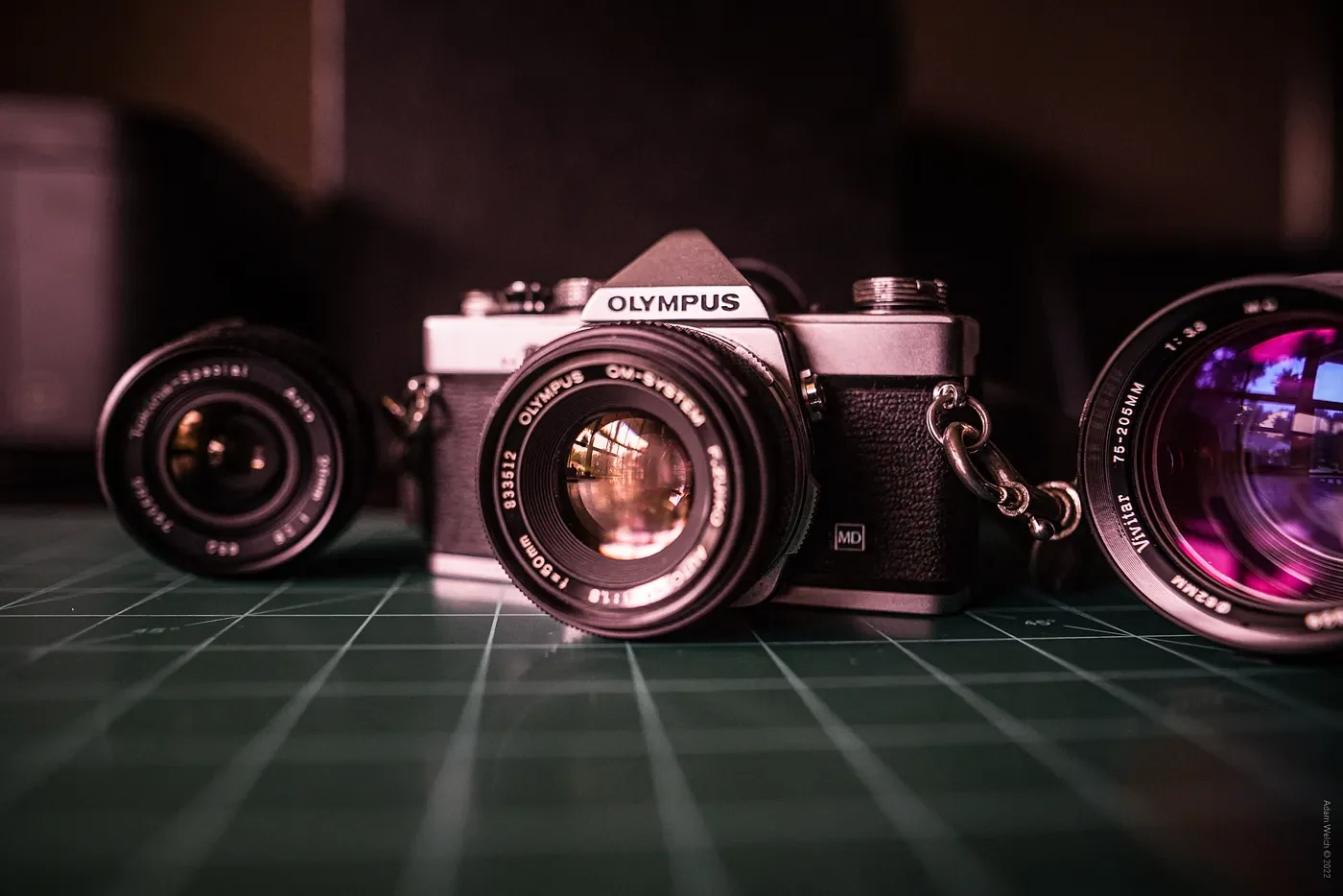
Case in point: my gorgeous Olympus OM-1n.
To be more exact, it is an Olympus OM-1n (MD) but we’ll carve up all those obscure letters in horrific detail shortly. For now, just look at it.
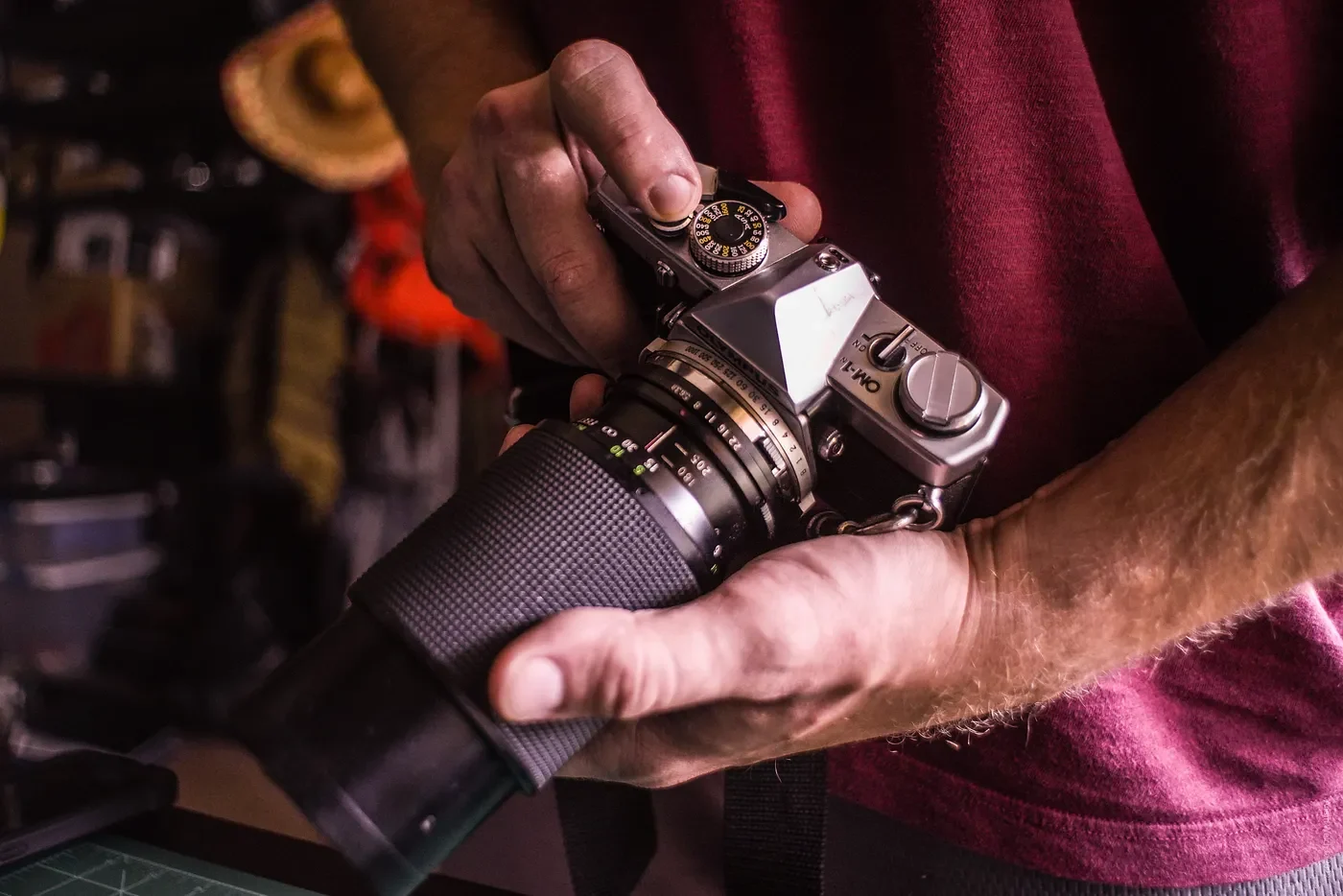
As we walk around the camera you’ll notice all the usual fare expected to be served up on most mid to high-end 135 format SLR cameras. There is a predominant ISO/ASA selector wheel to the right of the prism mons ranging from ISO 25 to ISO 1600. The single throw film advance arm rests perfectly between the ISO dial and the frame counter. While there is no uni-body hot/cold shoe this can be added (I actually have one) to the top of the camera to facilitate non-TTL flash attachment. However, the OM-1n does also feature a dedicated flash sync port.
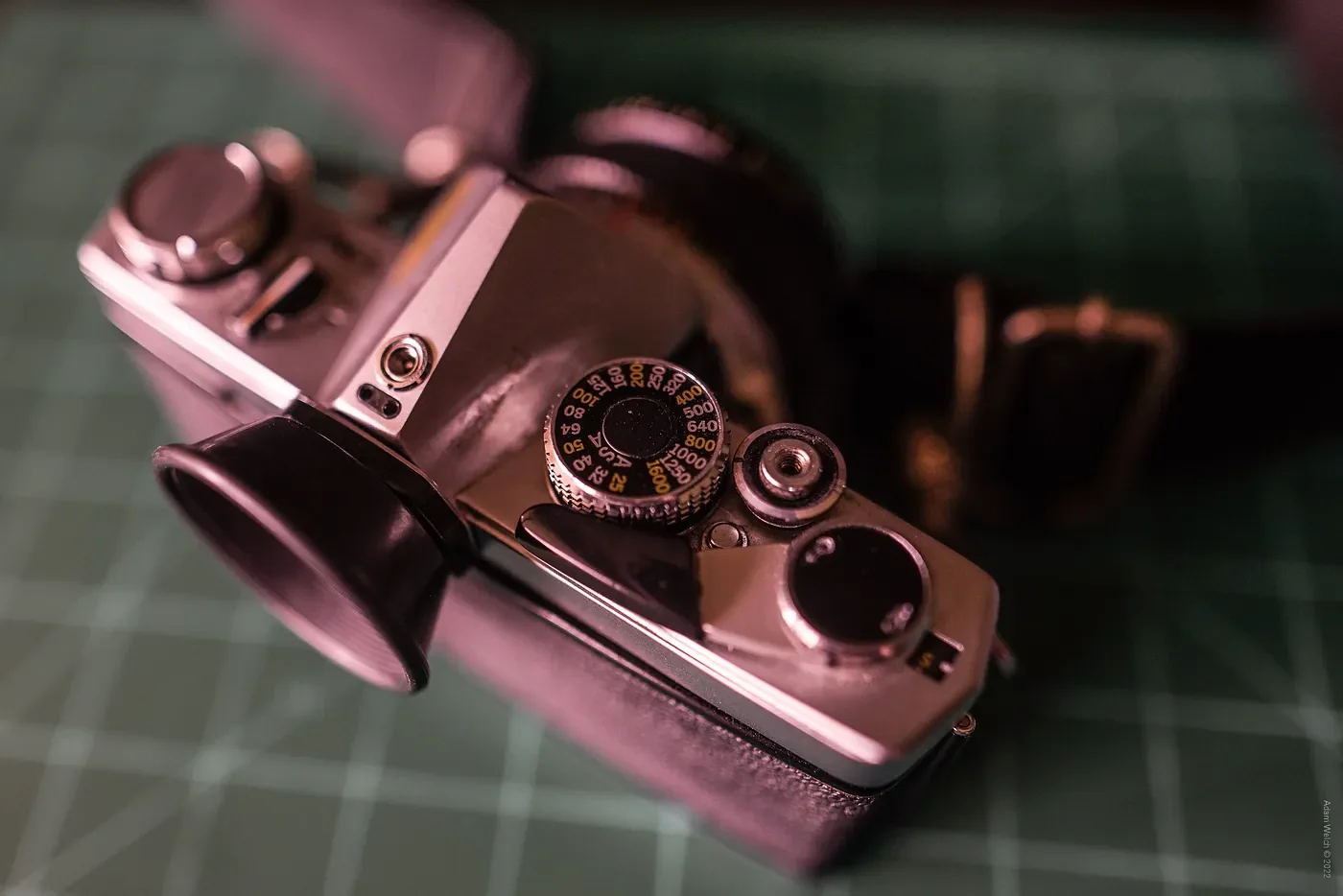
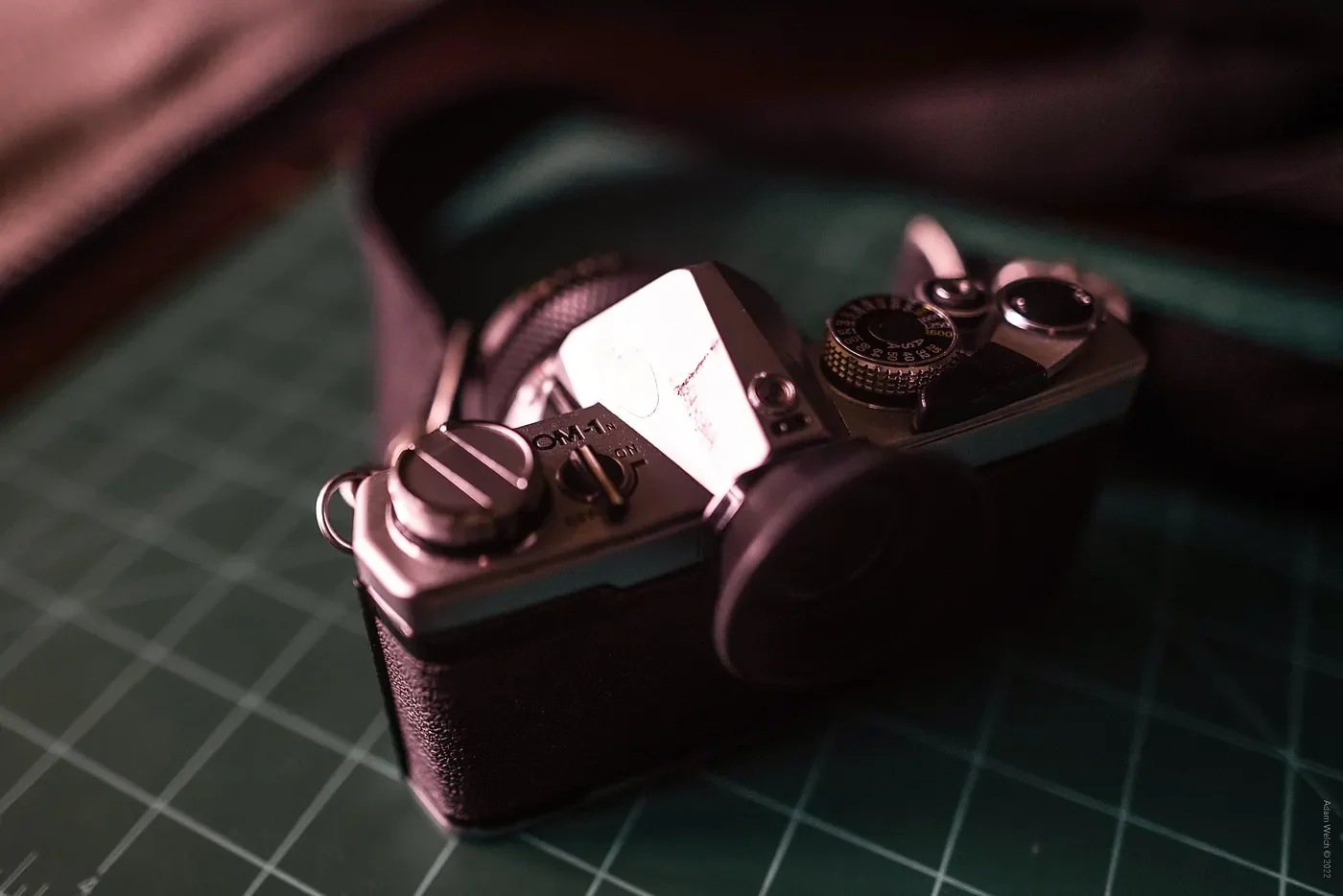
The film rewind knob, as well as a large switch for the light meter power supply, are both located to the left of the prism.
From God to Man to Me
The Olympus OM series is a cluster of cameras of which the entire race of Man (I use that as a term of humanistic inclusion, don’t give me any shit) is wholly unworthy to wield. From the initial birth of the first OM-1 in July of 1972 all the way to the official termination of the OM line in 2002, the service of these beautiful little SLR cameras is remarkably underrated. Even now, as we wallow naked in the mud of digital image capture, the OM has pulled somewhat of a Lazurus move and resurrected itself in the form of the Olympus OM-D series…but that’s water to be waded another time.
Upon it’s release, the OM-1 was the most compact, lightest SLR camera on the market. It exploded on the picture world like a photographic hand grenade. Originally produced as the Olympus M-1 it’s popularity eventually spurred Leica (yes, that Leica) to directly request Olympus change the name as to not steal any thunder from their own legendary 135 rangefinders.
With the designation of the cameras officially changed to OM-1, Olympus continued to push the envelope further with the second generation of the OM-1, my baby here, the OM-1n (MD). I brought my beloved OM-1n back from the brink and you can watch the whole resurrection process (plus my own brand of permanent light seal install) below:
N for “New”
Aside from the on-board light meter (which I never use) the OM-1n is a marvel of mechanized cameratic glory. It is considered by many, including this deranged author, to be the proverbial “sweet spot” of the entire OM line of camera bodies. The OM-1n was produced from 1979 to 1987 and falls smack in the middle of a puddle of engineering refinement precipitated by user feedback from the original OM-1.
The “N” in OM-1n stands for “New” and for good reason. This camera rests comfortably free from the reliance of the OM-2’s (the proceeding OM model)
integrated circuitry while keeping all the clockwork machinations of it’s founding forefather.
*Author’s Note: The story of the OM-series is shockingly complex and “tweener” models abound. For a sadistically in-depth nose dive into these cameras I highly recommend my friends over at mir.com.*
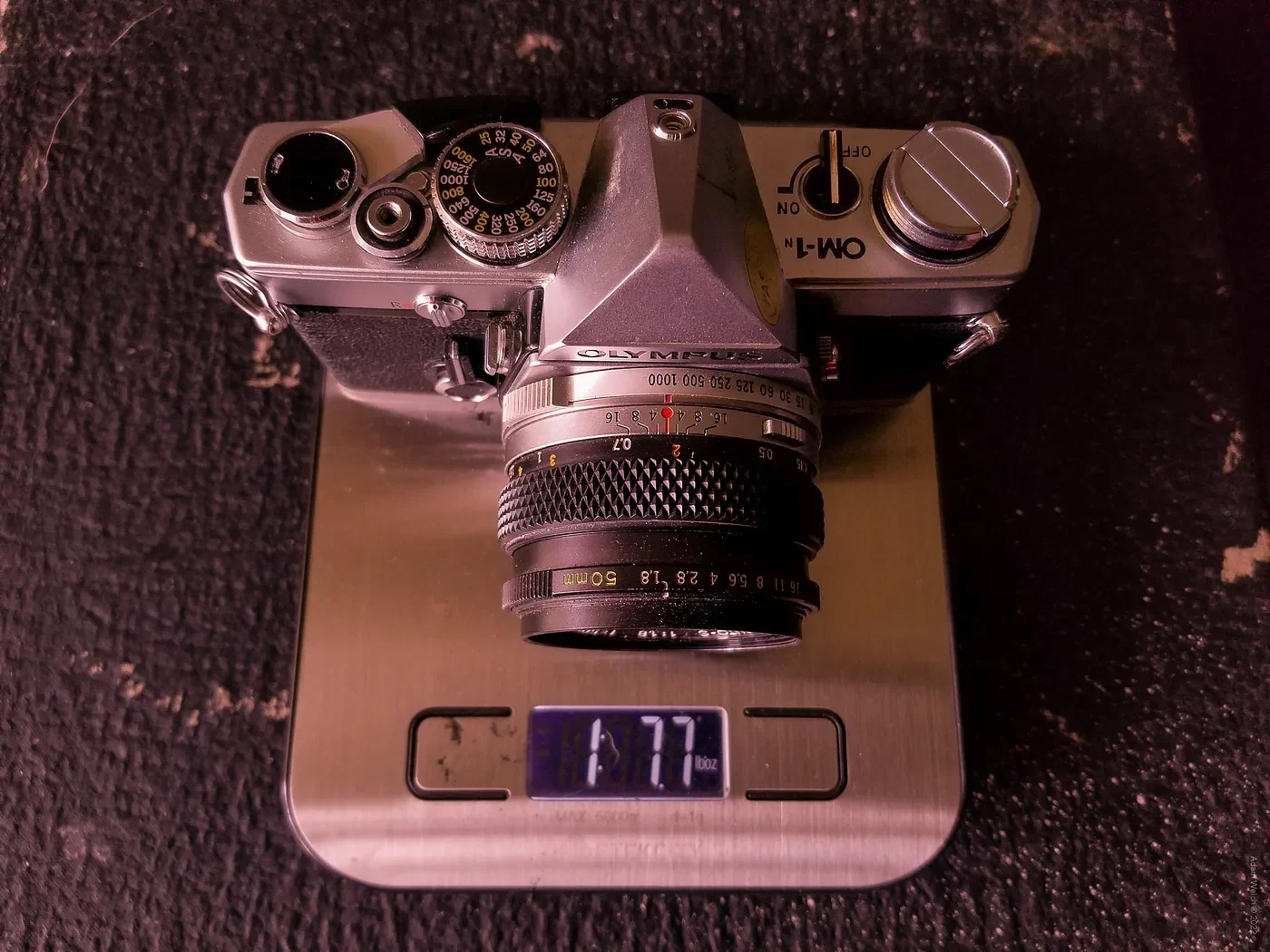
The OM-1n is small but unexpectedly fierce. Weighing in at just over a pound (about 510g) for the empty, lensless body.
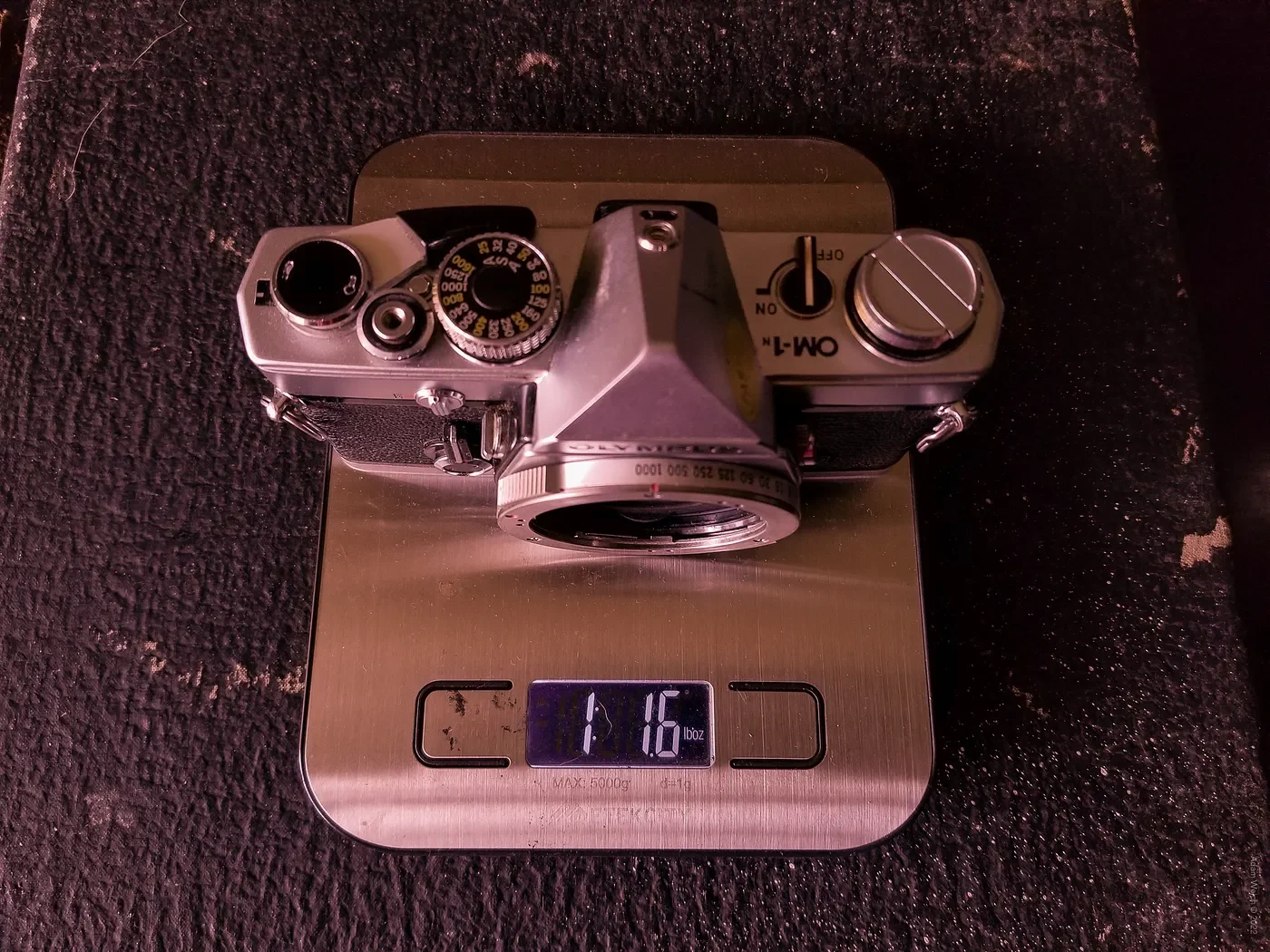
Add on the estimable Zuiko 50mm F/1.8 and the entire setup (without film or batteries) still parks itself well under 2lbs (907g).
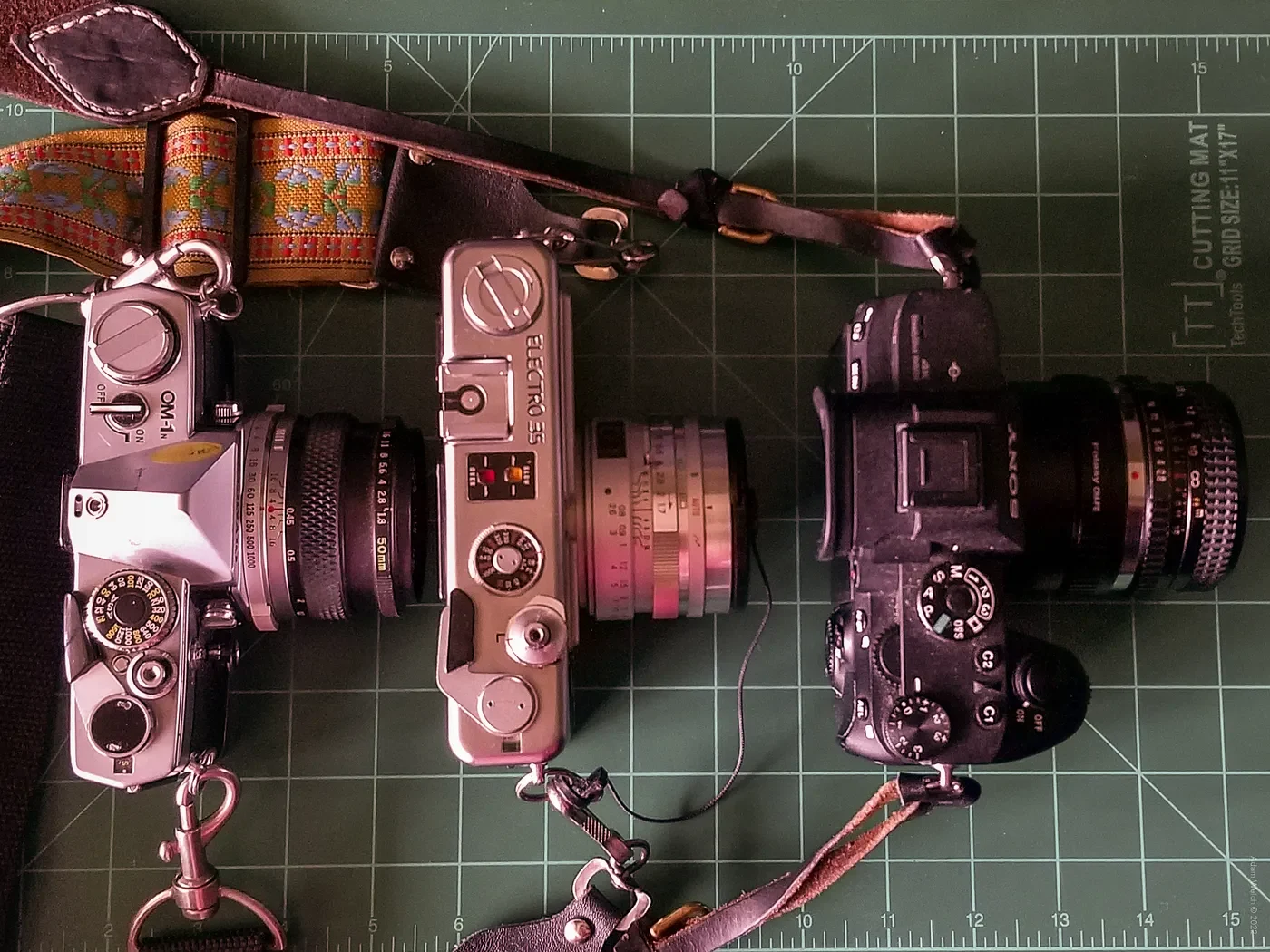
Indulge yourself in a size comparison between the OM-1n and two other cameras of virtually identical format: the Yashica Electro 35 GSN rangefinder (whom you’ve met already) and the more modern, digital Sony A7R MKIII.
Don’t let the skimpiness of dimension trick you into thinking the OM-1n is some soft piece of gear not meant to endure the pain and torture of field use.
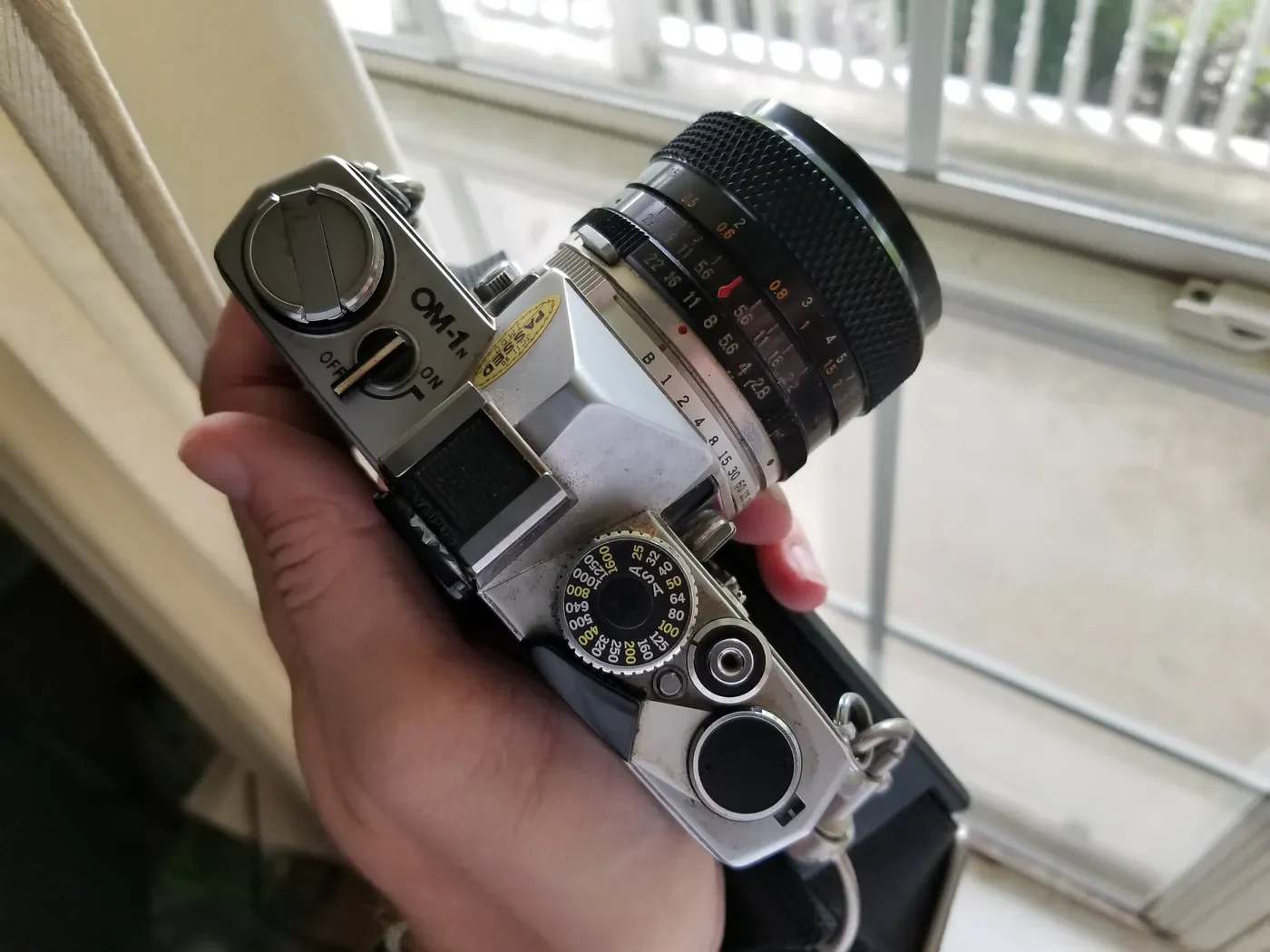
Although it is a classic example of “you just have to feel it for yourself” the OM-1n handles like a tank. It just feels solid; well-built; girthy even, despite it’s unassuming heft. This has made it a sleeper cell workhorse for landscape photographers and street shooters even today. It’s just nearly impossible to kill the bastard.
More features than a Singapore whorehouse
For a purely mechanical camera the OM-1n sports a wildly impressive stable of features and capabilities. Namely, it shoots at a relatively blazing maximum 1/1000sec shutter speed.
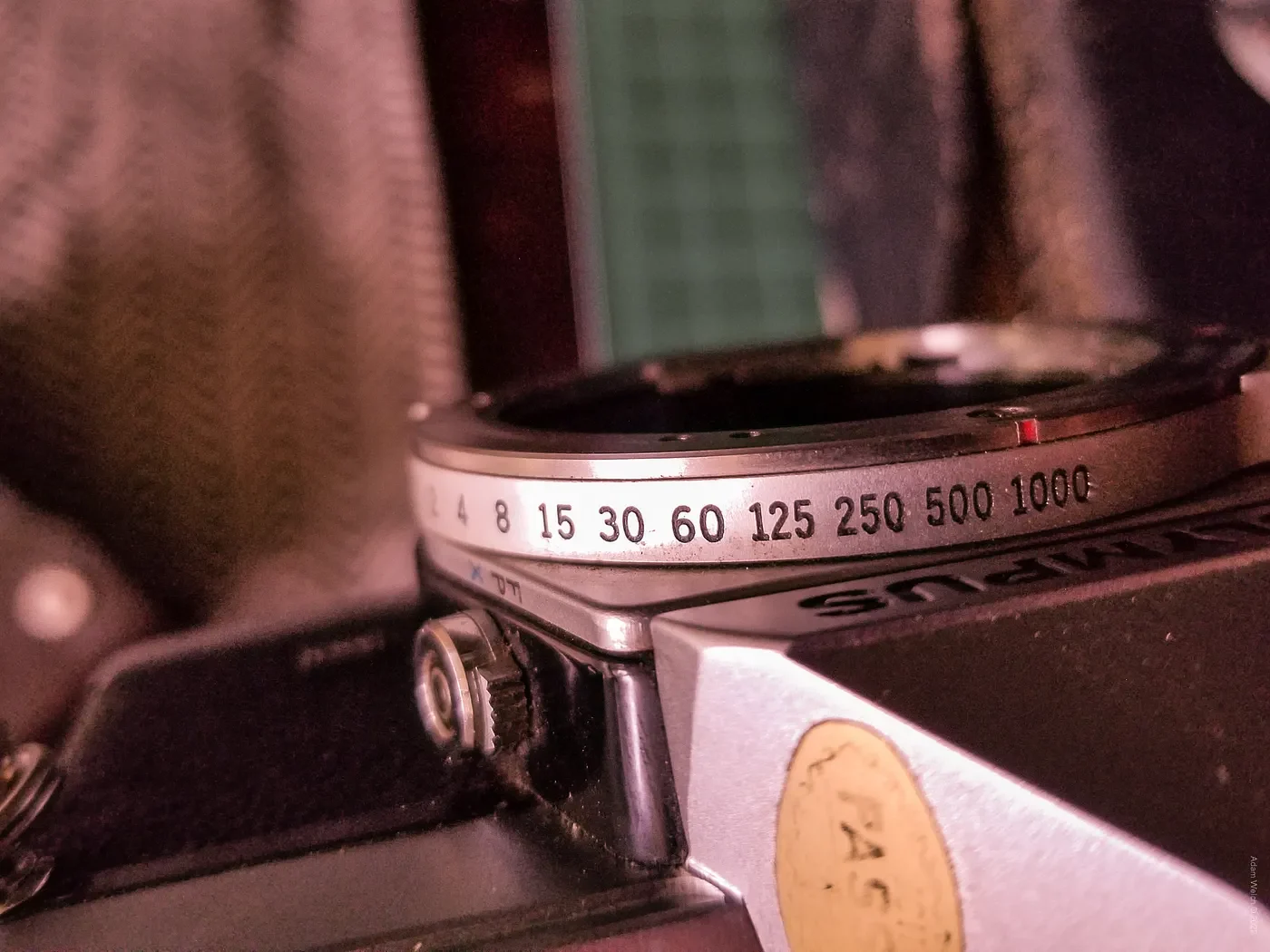
From here the speeds slow in full-stop decrements all the way to 1 second. There is a “bulb” mode as well and if you might have asked me prior to penning this article I would have sworn the OM-1n featured a “timed” mode but, in reality, apparently it does not. Blame it on Mandela.
You’ll likely notice the shutter speed selection is constructed integral to the lens mount rather than elsewhere on the camera body. Some people love this but for me it is likely my least favorite aspect of the OM series. Seeing as the OM lens mount features an “on-lens” release the shutter selector, at times, becomes confused with the lens release itself. Add in the fact that the shutter adjustment ring brings the tally of lens rings to three (including aperture and focus) and you’re left with an operational interface which leans towards the fiddly side unless you’re experienced with the OM mount system.
Other than this little gripe, the shutter and mirror system of the Olympus OM-1n is an absolute joy to watch. It’s smooth, quiet, delightfully non-percussive. This is thanks largely to a remarkably ingenious air-dampening system within the mirror box.
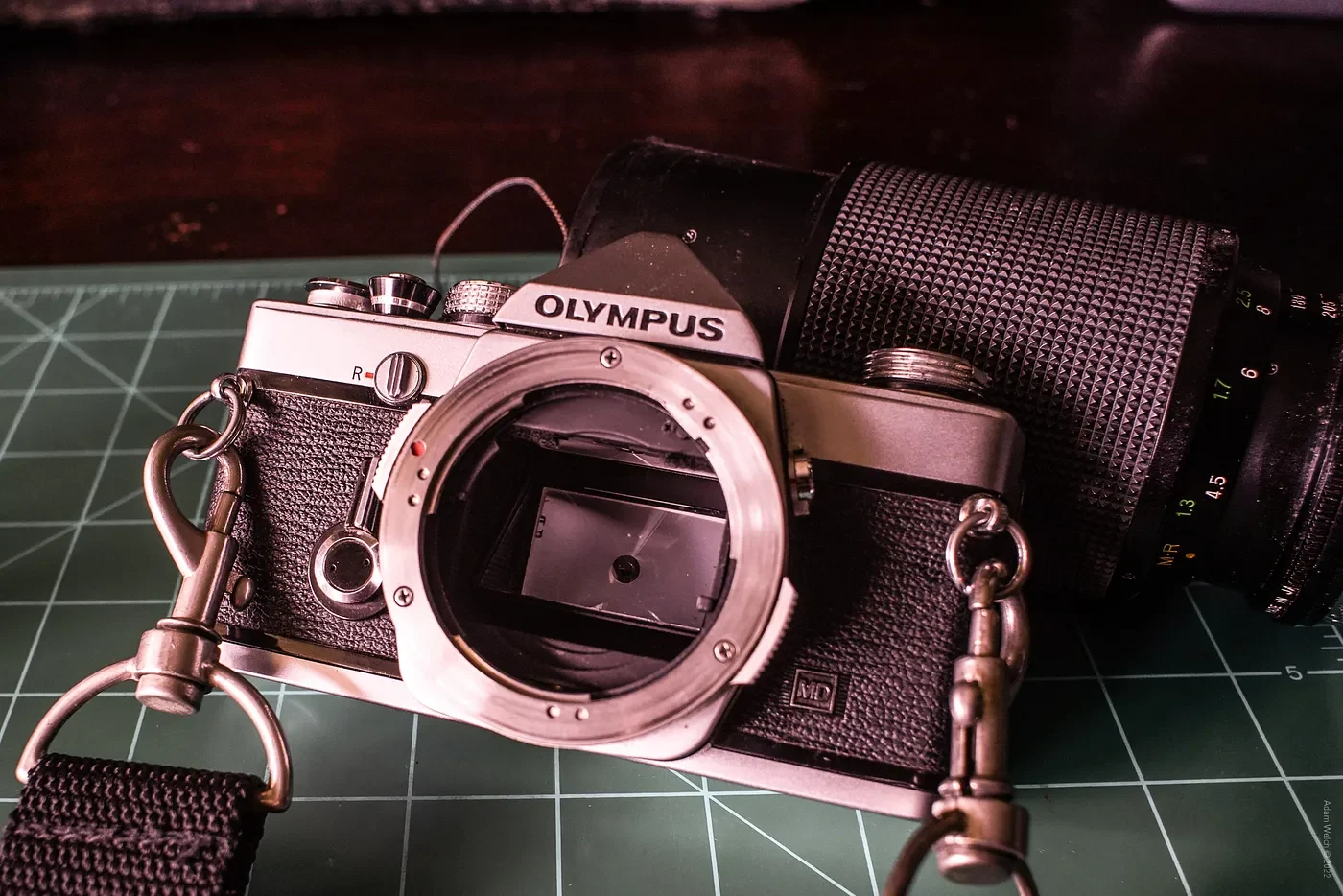
Speaking of mirrors, the OM-1n sports a dedicated mirror lock-up switch which further serves to reduce camera shake during long exposures. This is another reason why landscape photographers adore this camera.
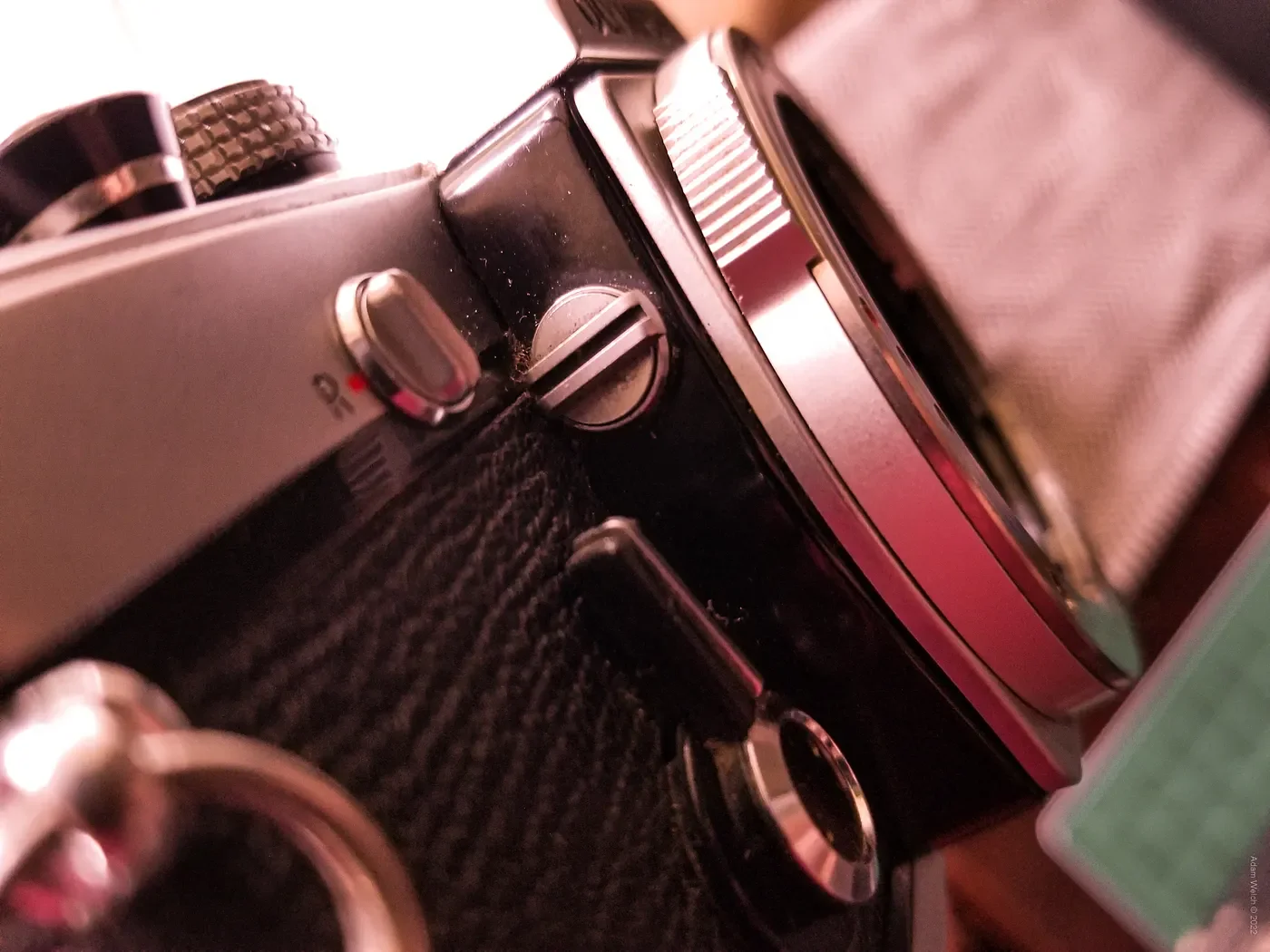
Since you’re special, you can view a real-time actuation of both the shutter/reflex of the Olympus OM-1n and it’s mirror lock-up function over on my YouTubes below. I have no idea why it won’t show the thumbnail.
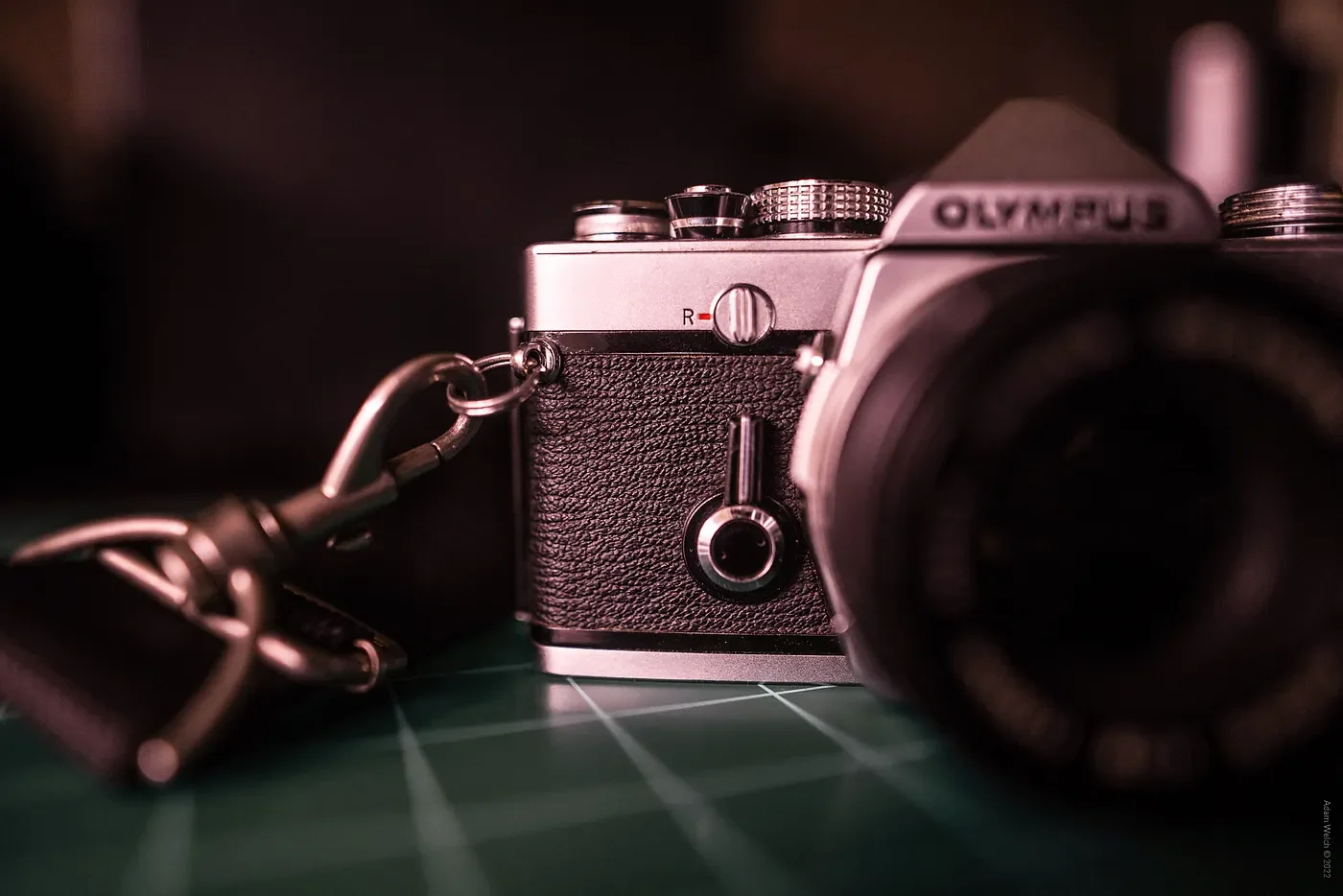
Olympus also chose to migrate the film rewind release switch (shown just to the left of the mirror lock-up) to the front of the camera as opposed to the more commonly located bottom position. This release switch can be found directly above the self-timer lever — yes, the OM-1n has a built-in 12 second(ish) timer.
Before we shuffle along to greener pastures, one of the more wonderful yet not often proclaimed features of the OM series needs to be addressed and that is it’s marvelously huge viewfinder. At normal focal lengths (around 50mm) the viewfinder of the OM-1n offers a 97% field of view.
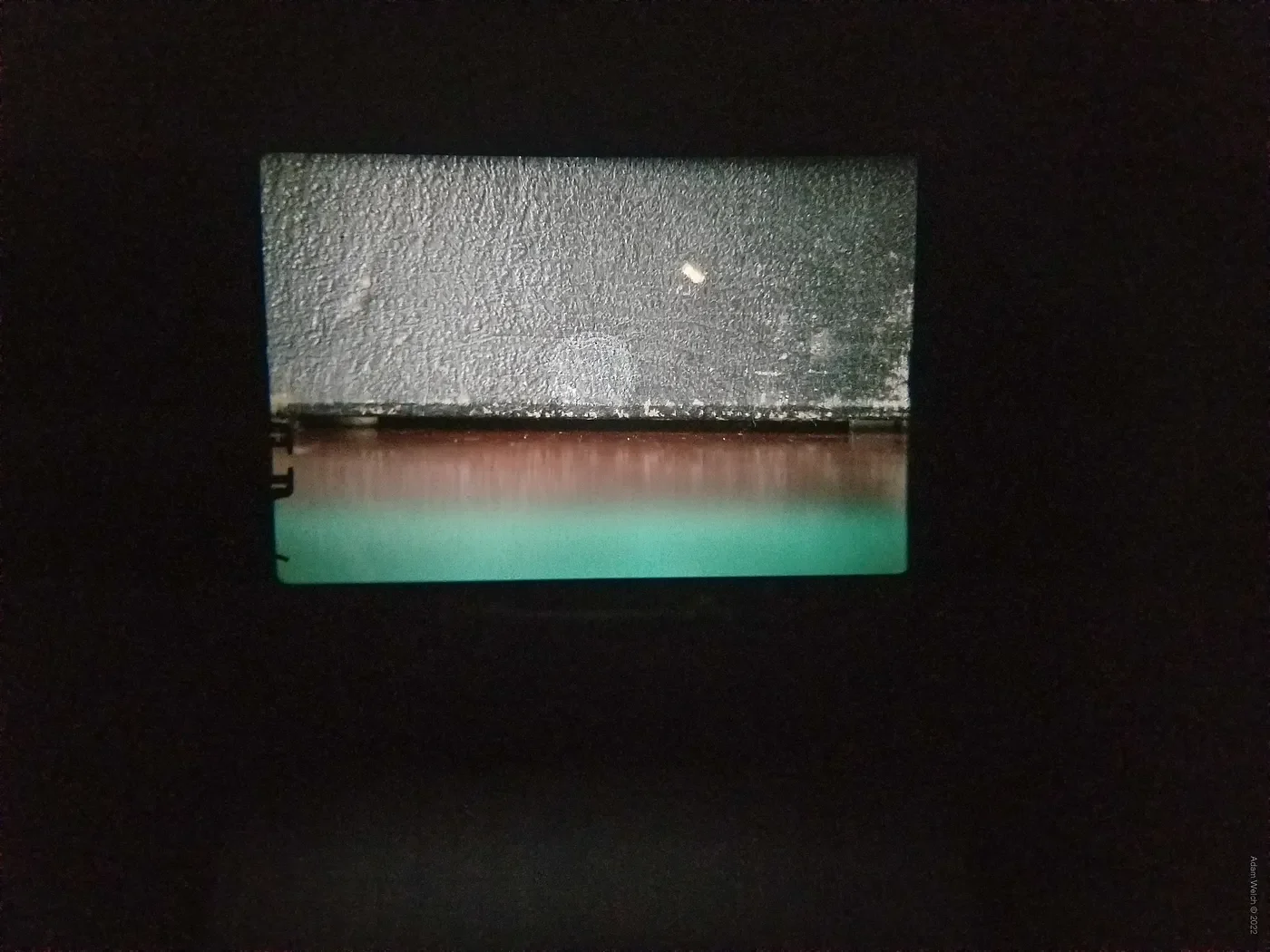
Considering it’s relatively slim form factor, this makes for a remarkably breezy compositional experience and larger than comparable SLR cameras contemporary of the time period — even without the optional eye cup… which we’ll eventually get to, don’t worry.
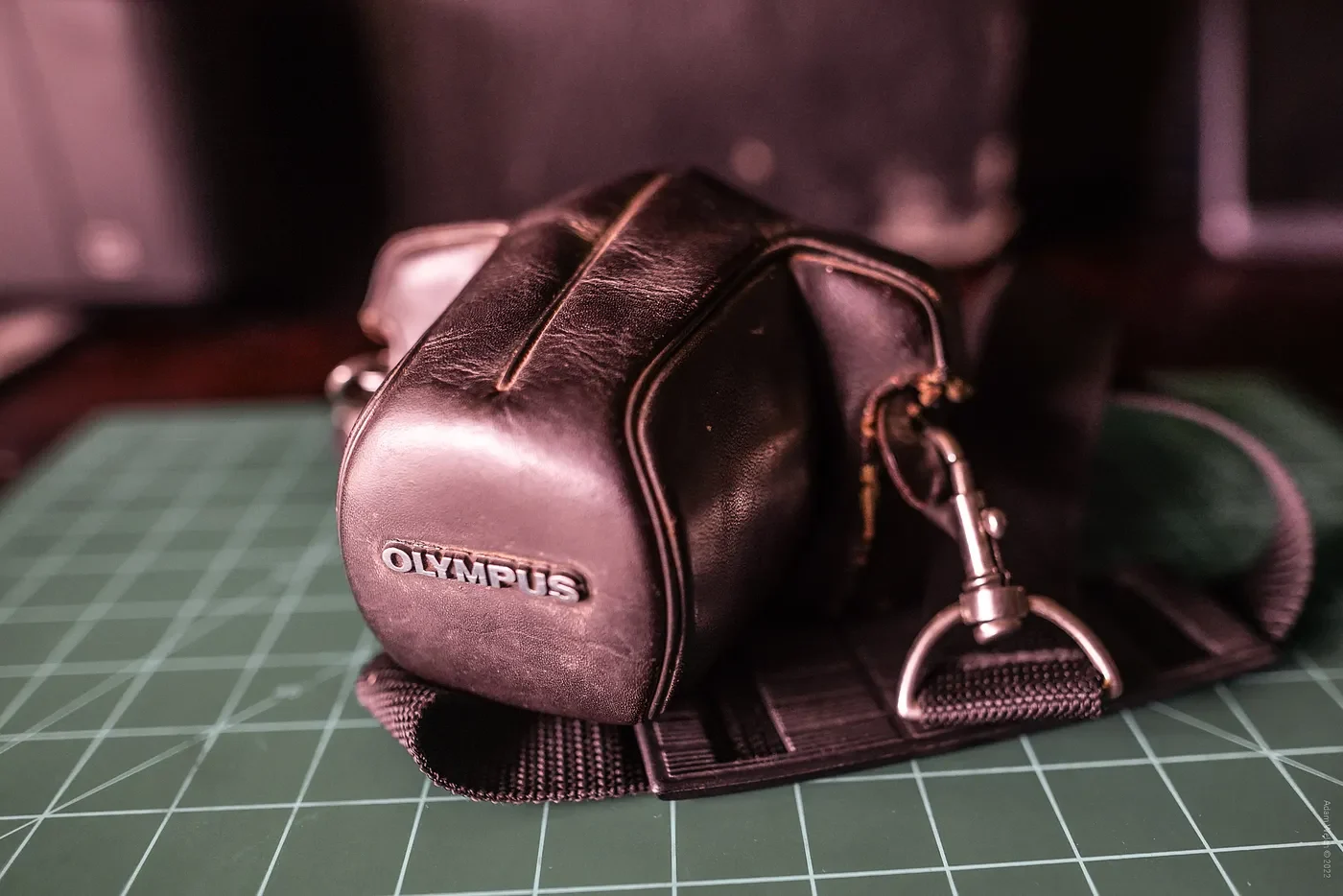
All this goodness is wrapped lovingly within a wholesome, sesame seed bun in the guise of a heavy leather case. The OM-1n (along with the Electro 35) is one of the few cameras I leave in it’s half-case while on the prowl.
All them letters…
I mentioned at the beginning of this rag that we’d come back to explain all those letters floating around in the official designation of the OM-1n (MD). We’ve covered the “N” (new model) but what about the “MD”? Hell, what about the “OM”?
We’ll proceed with the last part first and the first part last and then meet back in the middle like the true psychopaths we are.
The “OM” in the OM-1 series stands for “Olympus Maitani” and is a tribute to this brilliant man, Yoshihisa Maitani.
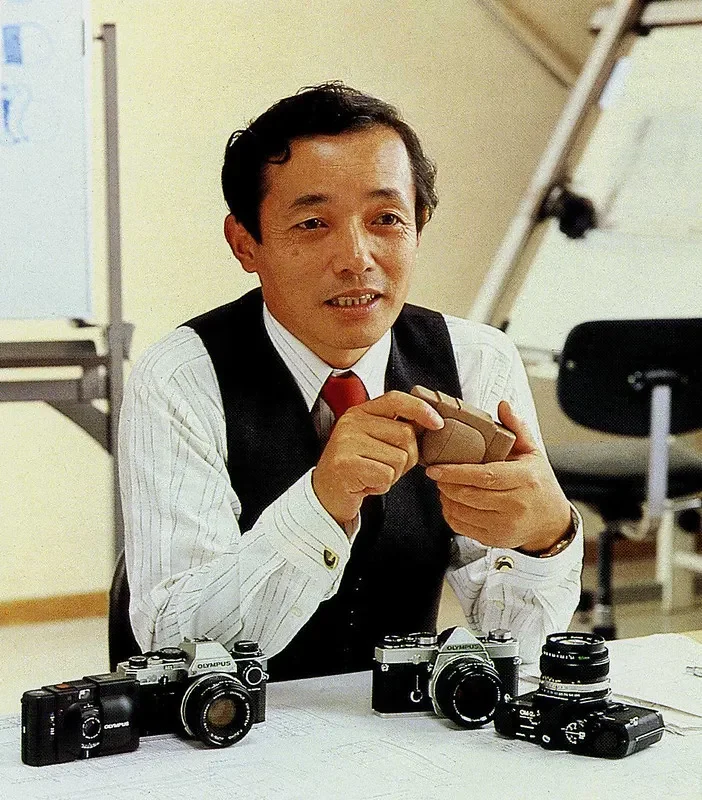
Yoshi is the “M” in “OM” and he was the chief designer for the Olympus Corporation from 1956 until shortly before his death in 2009. He was one of the driving forces behind not only the OM series of cameras and lens but also the Pen and Pen F before bringing the Olympus brand into the digital age with the Stylus series. Mr. Maitani is an unsung hero (one of the many) in the foundational development of most SLR-based digital camera systems we know today.
Those remaining alphabetical danglers, “MD”, designate this particular OM-1n as a “motor drive capable” model. Believe it or not, it is this very capability which punted the entire idea for this massive review of the OM-1n into reality.
Not more than an hour ago I hurled a laughably low-ball offer (as is my way) towards a listing for an ‘OM Winder 1’ over on eBay. As luck would have it, it was accepted.
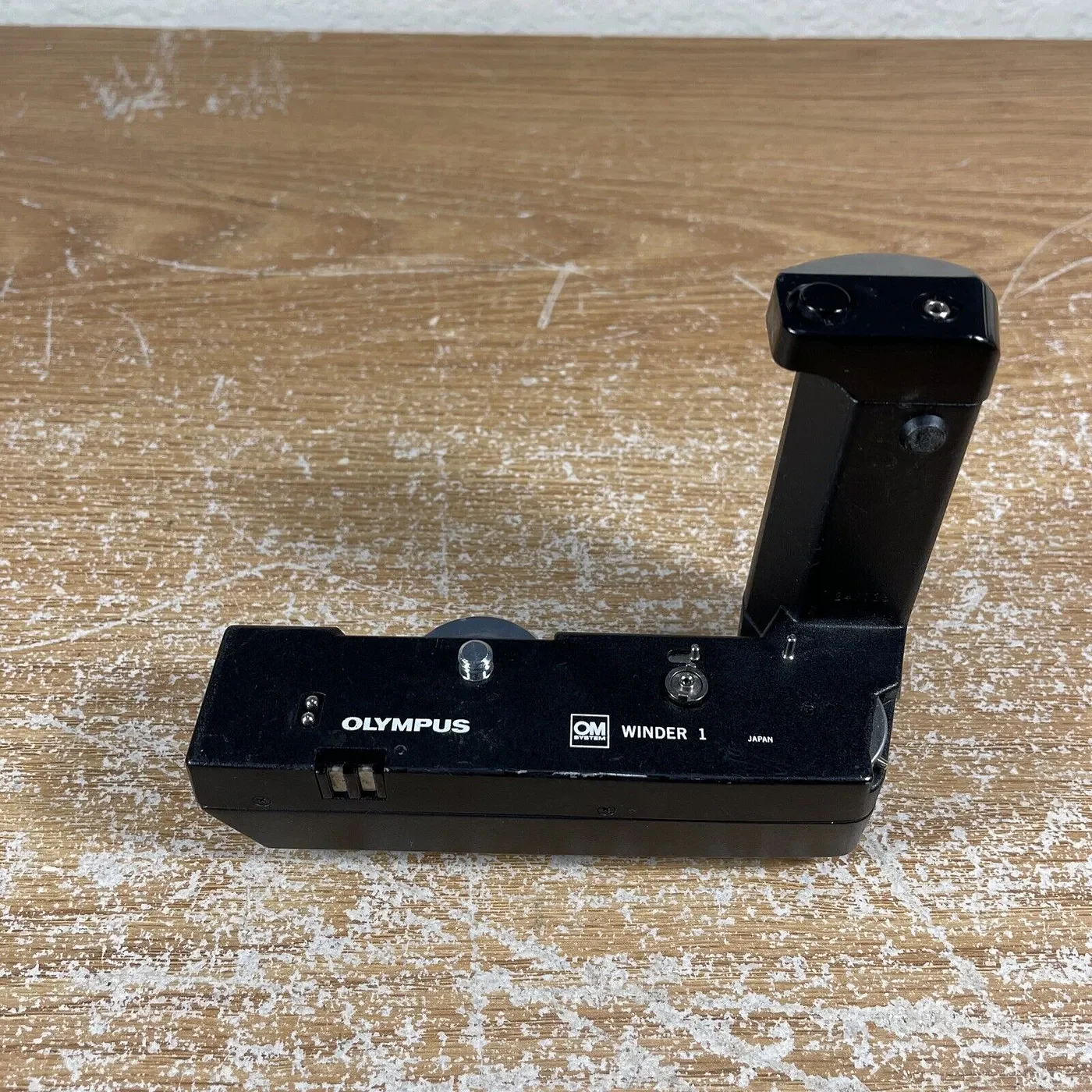
Now, given my last eBay experience with the Kiev 88 was something out of the rape chapter from some early Russian novel, I’m sincerely hoping that this motor drive for the OM-1n arrives as advertised (this person says it works). At any rate, this motor drive literally turns the Olympus OM-1n into a full-auto film advance camera capable of firing off at a rate of 5fps. No more lever throws for me — hopefully. I’ll be editing this section with an update and photos once this bad boy arrives.
***UPDATE 09/18/2022 — THE POWER WINDER IS HERE!***
It’s glorious!
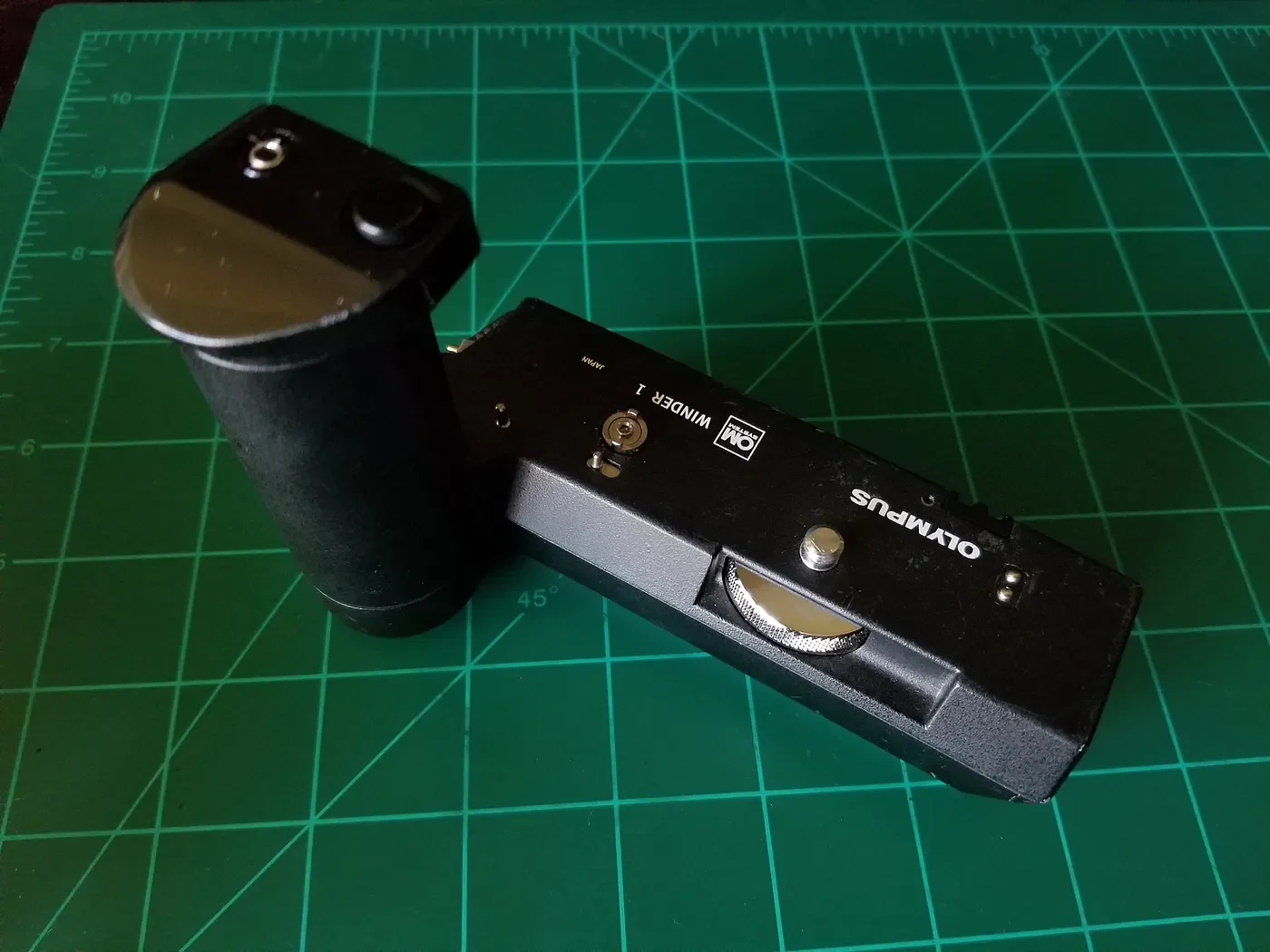
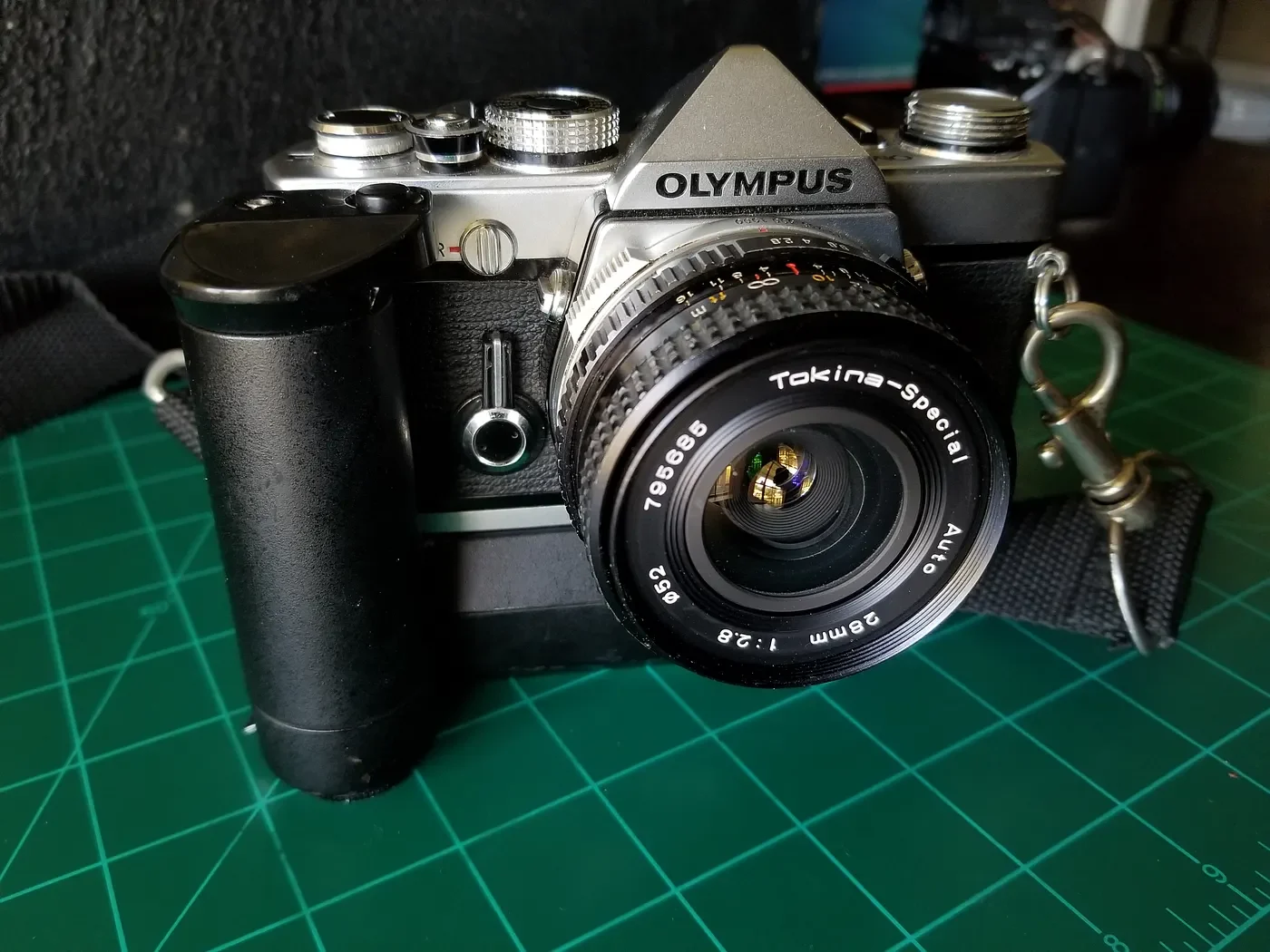
I wasn’t certain the power winder would be something I would like considering one of the reasons I love the OM1 is because of it’s wholly mechanical nature. However, it makes the ergonomics of the camera exponentially better (in my opinion) and also transforms the camera into the into the most “camera sounding” camera I’ve ever heard. Here’s a short clip of the OM winder in action with the OM1-n Olympus.
To top off things off, the winder features a cable release socket for a 2.5 remote. As it happens, the remote for my Bronica GS-1 just happens to be a 2.5mm — and it operates the OM 1 motor winder beautifully.
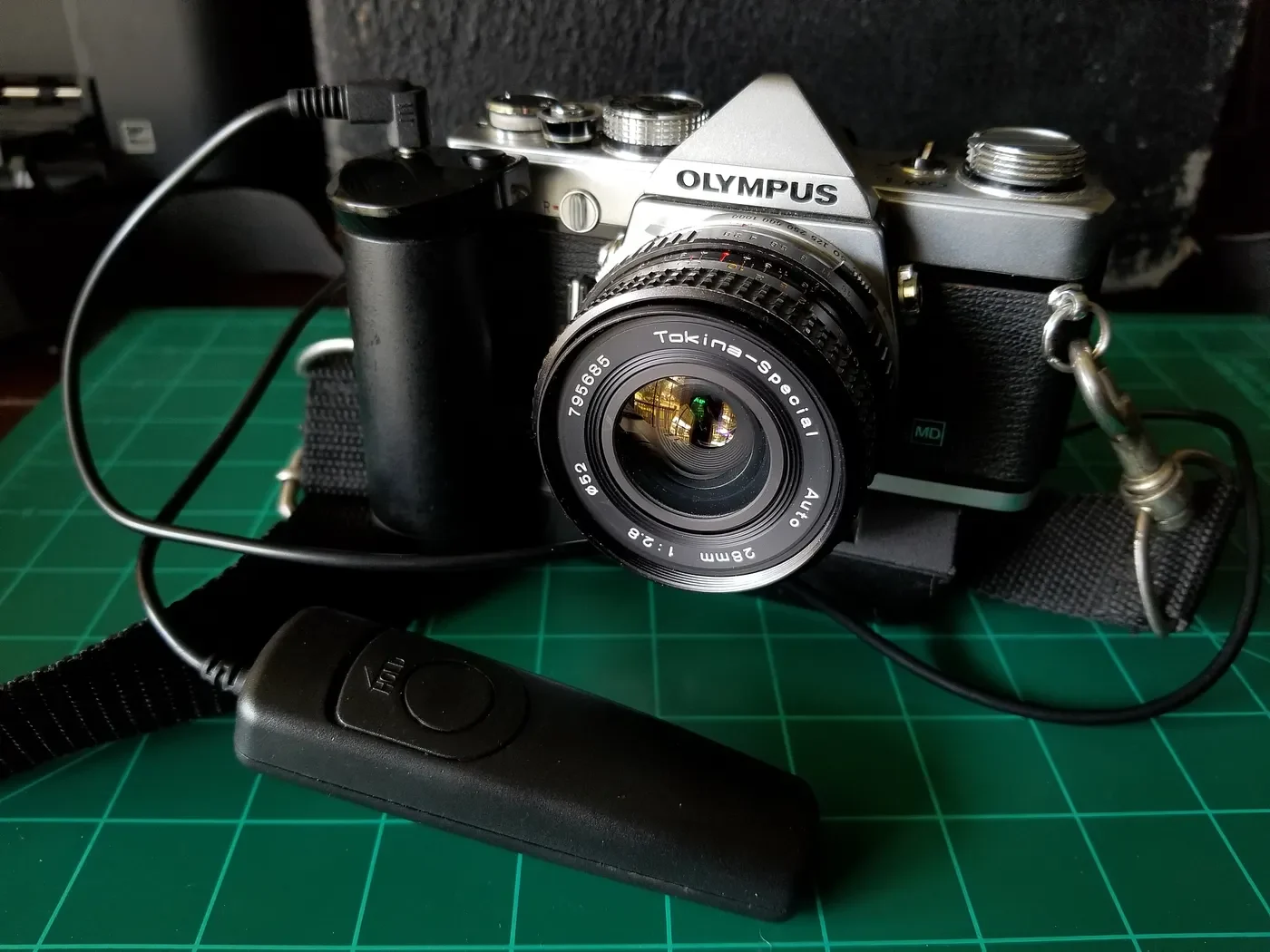
The motor drive/power winder requires 4 AA batteries which weigh a combined 2 ounces (about 57g). Add that to the weight of the winder itself (10 ounces/283g) and you have a relatively lightweight power house that makes advancing your film an absolutely breeze. I won’t use the motor winder all the time but for handheld work on the go I’ve got a feeling it will become my new best friend.
So, to break it down, the OM-1n (MD) camera is actually the “New model 1 Olympus Maitani motor-drive capable” camera. One empathizes with the need to whittle that down a bit.
Well hello Mr. Fancy Pants
The OM Winder 1 motor drive isn’t the only little nugget of Gucci-grade appurtenance still readily available for the OM-1n — far from it. As un-likely as it might seem, the OM series of cameras were made ready for remarkable customization in both function and utility, especially when it comes to the viewfinder. You’ve likely noticed that massive eyecup mounted on the rear of the viewfinder of my particular OM-1n.
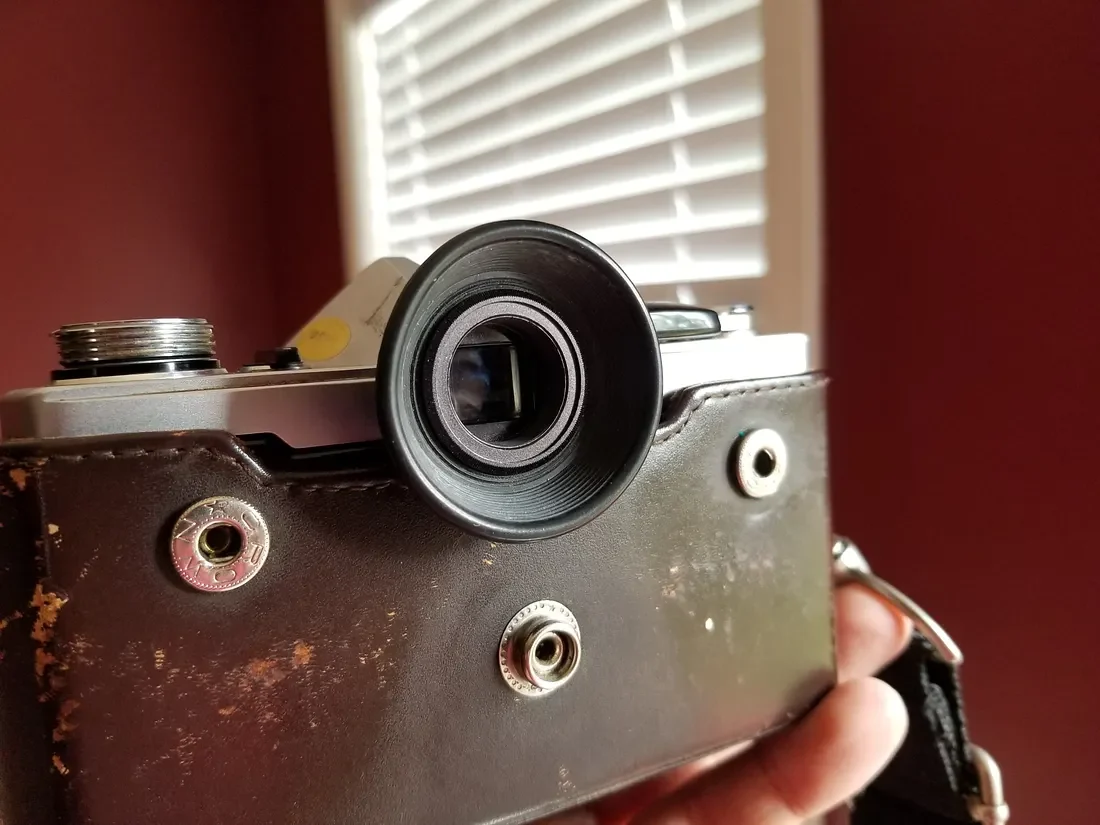
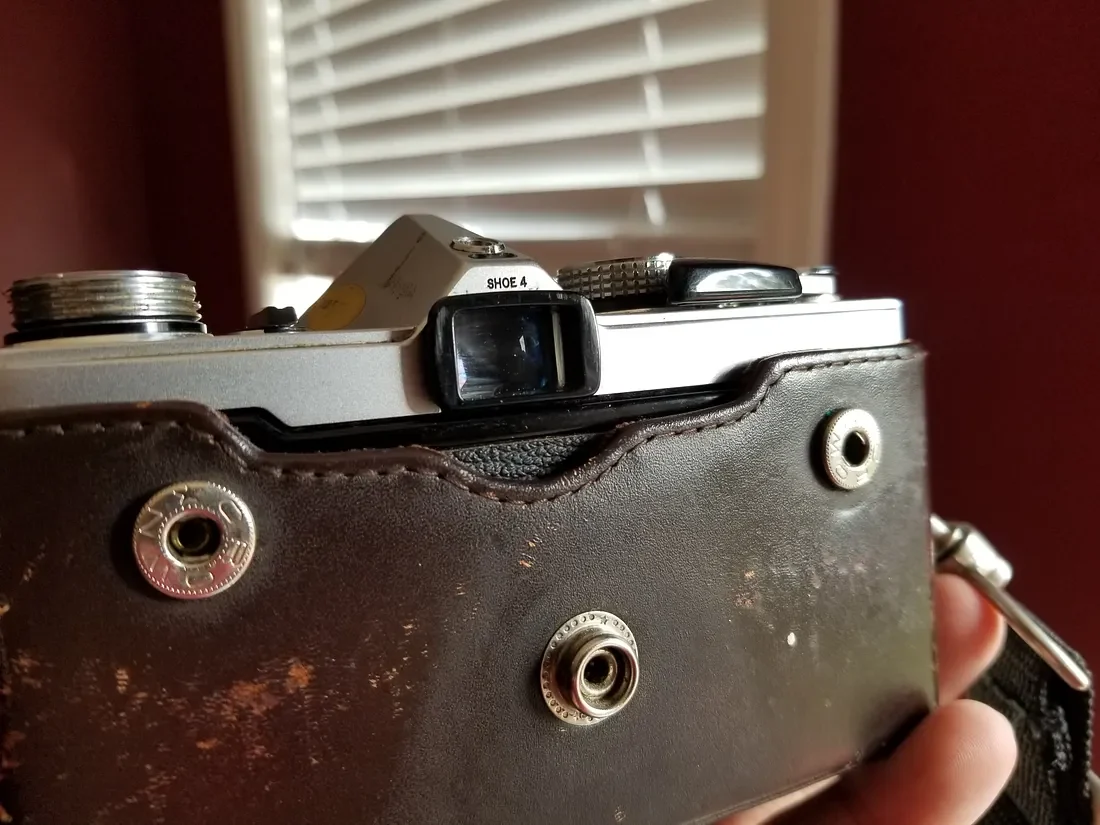
Yep. That is an accessory that just slides right onto the viewfinder mount… and I only mention that to get to this: the favorite thing I’ve ever added to an SLR camera.
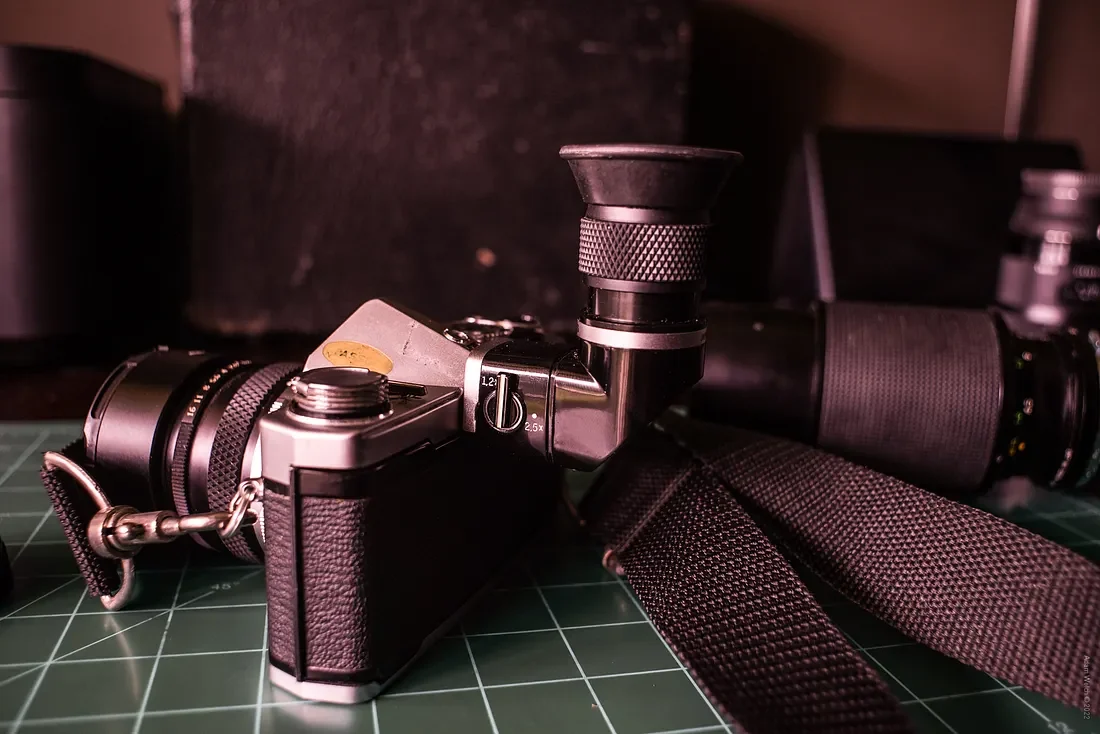
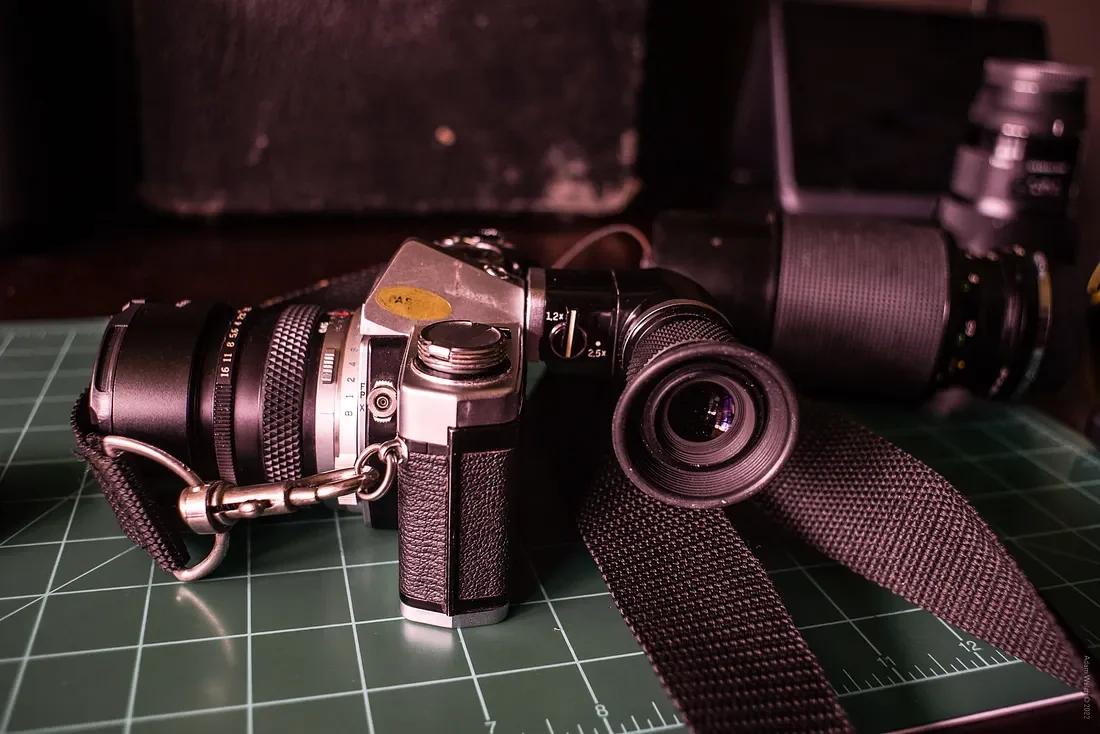
No big deal. Just a dedicated right-angle finder that sings out long and loud a song of compositional freedom. Technically speaking, this is an Olympus Vari-Magni right-angle viewfinder. It allows for a near-waist level viewfinder shooting experience even when composing vertically. This allows you to get both high — and low — in relation to your subjects. It even features a 1.2x to 2.5x magnification selector. Yes, I love it and when I said that it is one of my favorite pieces of add-on gear of all time I truly mean it that way. You would be surprised just how many cameras (new and old) have available accessories such as this. At least I was.
Naturally, I couldn’t resist making a video of the damn thing when I first found it for my fellow nerds.
The Juice
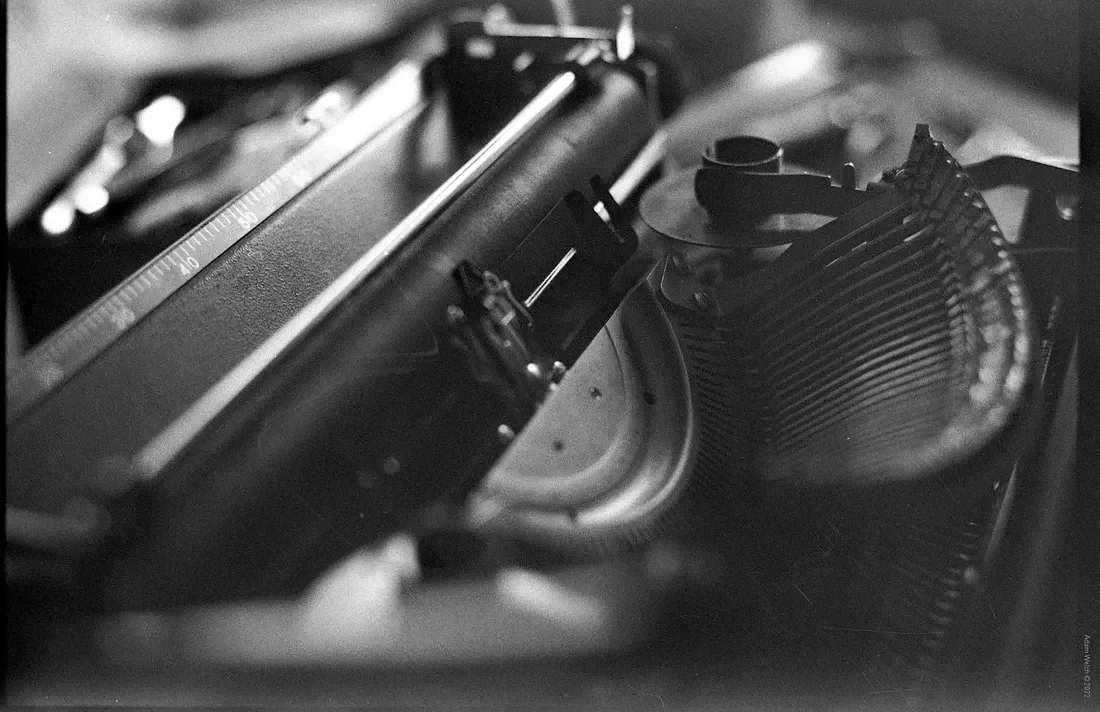
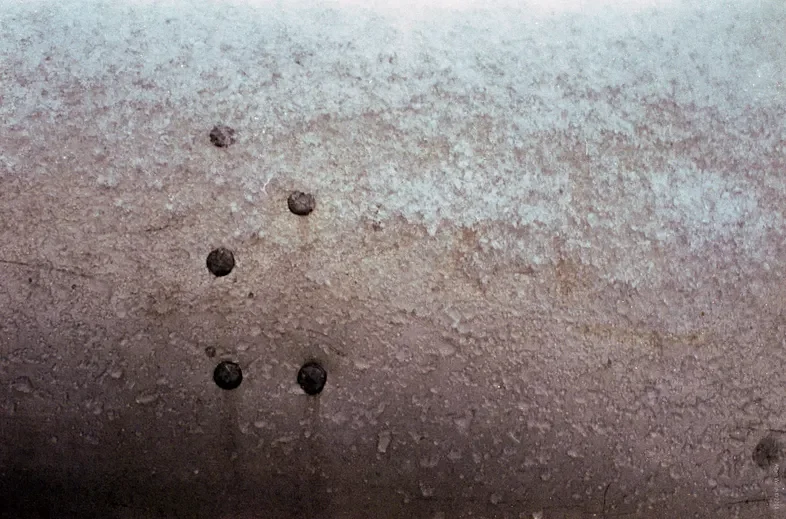
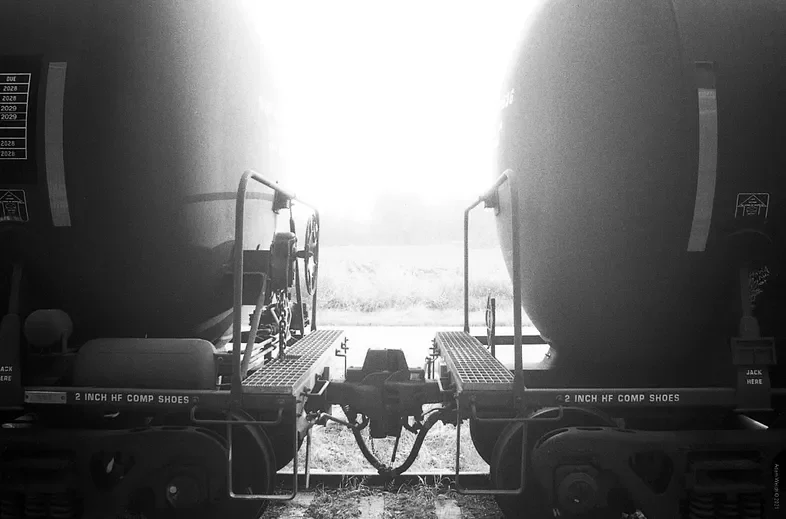
As always, what’s a little pudding without some proof? Well, I’m not sure that’s exactly the way that saying goes but, at any rate, here are a few pictures made with the OM-1n using various lenses and various films which I’m far too lazy to mention.











A Camera for the Ages
I’m happy to say that the Olympus OM series of cameras are fairly well-known. I’m even happier to to say they aren’t that well-known. Cameras like the OM-1 and OM-1n graced the world in their own certain way while never truly becoming mainstream icons. They fit right in between the popular and the unknown with a relatively small contingent of ordained disciples compared to the “Big Boys”.
Canon, Nikon, Leica, and even Yashica seem to soak up more of the spotlight when it comes to producing photographic icons and that’s just fine by me. Hell, I prefer it that way. Unlike some other cameras that ride the same spectrum, the OM-1n has remained surprisingly affordable even in the face of the recent film craze. Good versions of the camera can still be had for around $100US with lens (if you’re patient) but prices tend to vary wildly.
Here are some things to look for if you’re thinking about getting your own OM-1 or OM-1n:
Light seals: For whatever reason, the light seals of OM cameras tend to be notoriously horrid. Unless they have been recently replaced during a CLA you will likely need to change out the seals (and I highly recommend my more permanent method).
Slow speed shutter issues: In line with the aforementioned light seals, OM-1 series shutters tend to stick at slow speeds. This incidence varies between cameras and is due to the aging of lubricants. Be sure to explicitly ask the seller if all speeds function.
Lenses: One of the most common lenses to accompany the OM-1 series is the Zuiko 50mm F/1.8. It’s a superb lens and actually mates beautifully with many mirrorless, digital cameras. Often you will find a non-functioning OM camera that includes a pristine Zuiko lens for less than the price of the lens itself.
Gearing issues: Older models of the OM-1 experienced sporadic gearing issues, especially with the film advance. Many of these problems were remedied with the gearing upgrades in the OM-1n. Regardless, make sure you ask that the film advance not only advances the film spool but also cocks the shutter mechanism. The same goes for the film rewind disengagement switch.
Light Meter: The light meter is the only electric-driven mechanism in the entire OM-1n camera. As such, it is one of the common points of failure. Great deals can be had on OM series cameras who’s light meters have died but still function 100% mechanically perfect.
Have I led you to the Olympus Dark Side yet? If you’re looking for your own OM-1n then I would appreciate your throwing a bit of coin my way by using the eBay links below. I’ve made a general search direct for both the OM-1n and the devious little accessories that I personally use and have mentioned in this story.
The life changing OM right-angle viewfinder on eBay (OM series only)
OM-1 Eye Cup on eBay (OM series only)
OM motor drive 1 on eBay (commonly listed as a “winder”, winder 1 is for OM series only)
Zuiko 50mm F/1.8 on eBay One of the best 50mm primes available in my opinion. A great option to adapt to digital camera bodies.
Tokina 28mm F/2.8 on eBay A great, cost effective wide-angle lens for the OM series.
Vivitar 75–205mm F/3.8 on eBay An ABSURDLY underrated telephoto for both the OM series as well as for adapting to digital cameras.
All text and images copyright 2023 by Adam Welch unless otherwise indicated.
Buying through these links helps keep this site running.