The Quiet Glory of the Polaroid OneStep
A certain Gotham City district attorney once said “you either die a hero, or live long enough to see yourself become the villain.”
While it’s unlikely that many of you will ride out that saying and try to kill Batman in a Chris Nolan film, it’s altogether possible that some of us (the author included) might just end up becoming the very thing we once loathed…photographically speaking.
I love making pictures with my Polaroid OneStep. There. I said it.
Yes, yes, I know. I might as well grow out a man-bun and buy a one way ticket on the Trendy train to Hipster City. I’m certainly no stranger to the Polaroid process. My deranged interest in the “I want it now” flavor of photography goes back some years to a time when Polaroid instant film was actually considered a professional necessity for some (see this story on my adventures with 4x5 Polaroid film). I once even owned a beautifully minty, first generation Polaroid SX-70 kit but sold all that a couple years back because well — I never used the damn thing. We’ll talk more about that little situation a bit later.
For now…let’s talk about this little plastic beauty and all it’s quiet glory.
From the Visionary Mind of Dr. “Din”
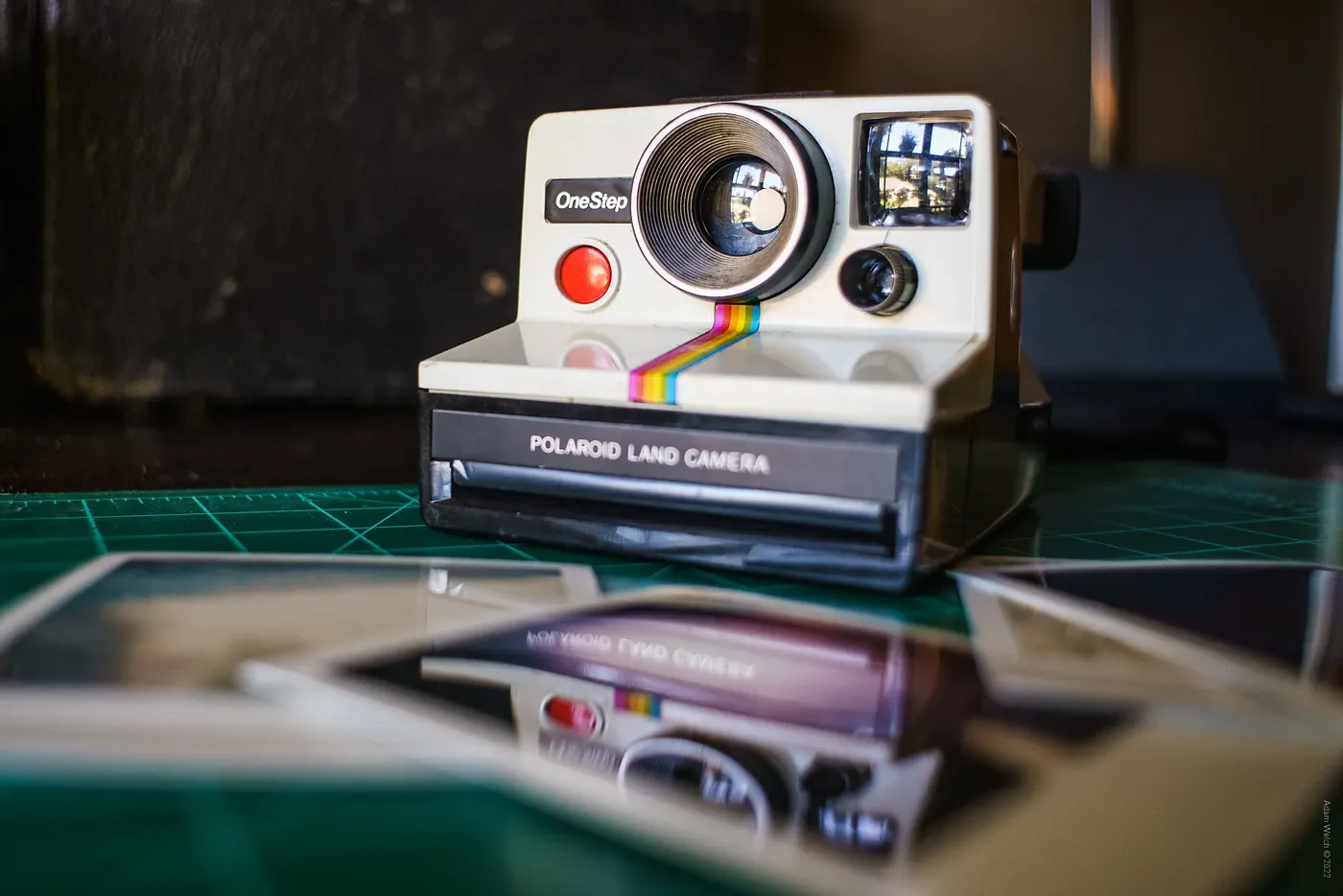
The Polaroid OneStep — the original OneStep that is — was the flagship model of Polaroids line of fixed-bodied (non-folding), pack film cameras which immediately proceeded the first generation of the SX-70 series. Released in 1977, the OneStep quite literally revolutionized an already innovative directional shift towards what a photograph could be. The idea that a photograph, more specifically a color photo could be produced from capture to print in less than 60 seconds was born from the mind of this man — Dr. Edwin H. Land.
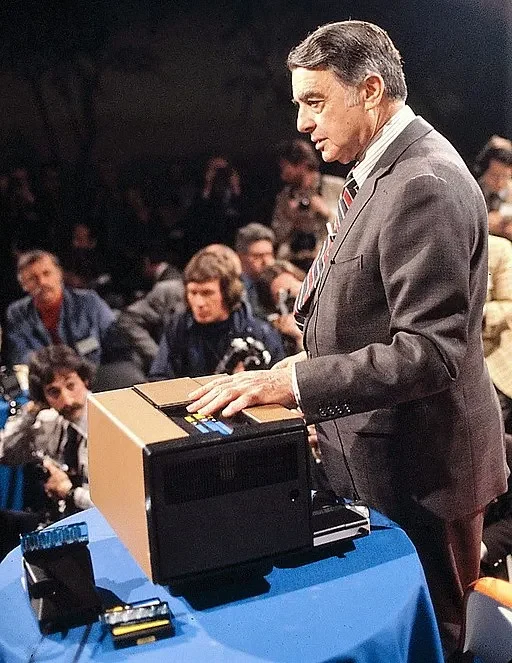
Dr. Edwin Land was a progressive genius who worked to bring photography to the masses unlike anything we’ve seen until the digital boom of the mid-2000s. He was an inventor and a scientist working in the area of optics and color theory. You can thank him and his team for gifting the world the polarizing lens filter as well as other mainstay contributions to industrial and surveillance photographic technology including work on the U-2 spy plane and the Retenix theory for color vision.
Land holds 535 patents to his name which places him in a heated third place finish behind Thomas Edison and Elihu Thomson. While not “technically” a doctor, Land was awarded an honorary doctorate from Harvard University in 1957 as well as other honorary degrees from institutions such as Yale and Columbia Universities.
Dr. Land passed on to that big laboratory in the sky on March 1st, 1991. He left instructions that, upon his death, all personal papers and notes were to be destroyed; an act which was carried out by one of his lab associates — and took three years to complete.
What a power move.
Red buttons, green buttons, and that damned Instagram
The OneStep camera is a simplified, plastic-bodied distillation of all the best attributes of the legendary SX-70 folding cameras. Driving the design of the OneStep was the paramount notion that the camera should be ridiculously simple to use and easily mass produced. Externally, the OneStep has nearly no moving parts. The photographer is met with a lens, a viewfinder, a shutter button, frame counter, and an elementary exposure compensation dial. We’ll talk more about that exposure dial in just a bit.
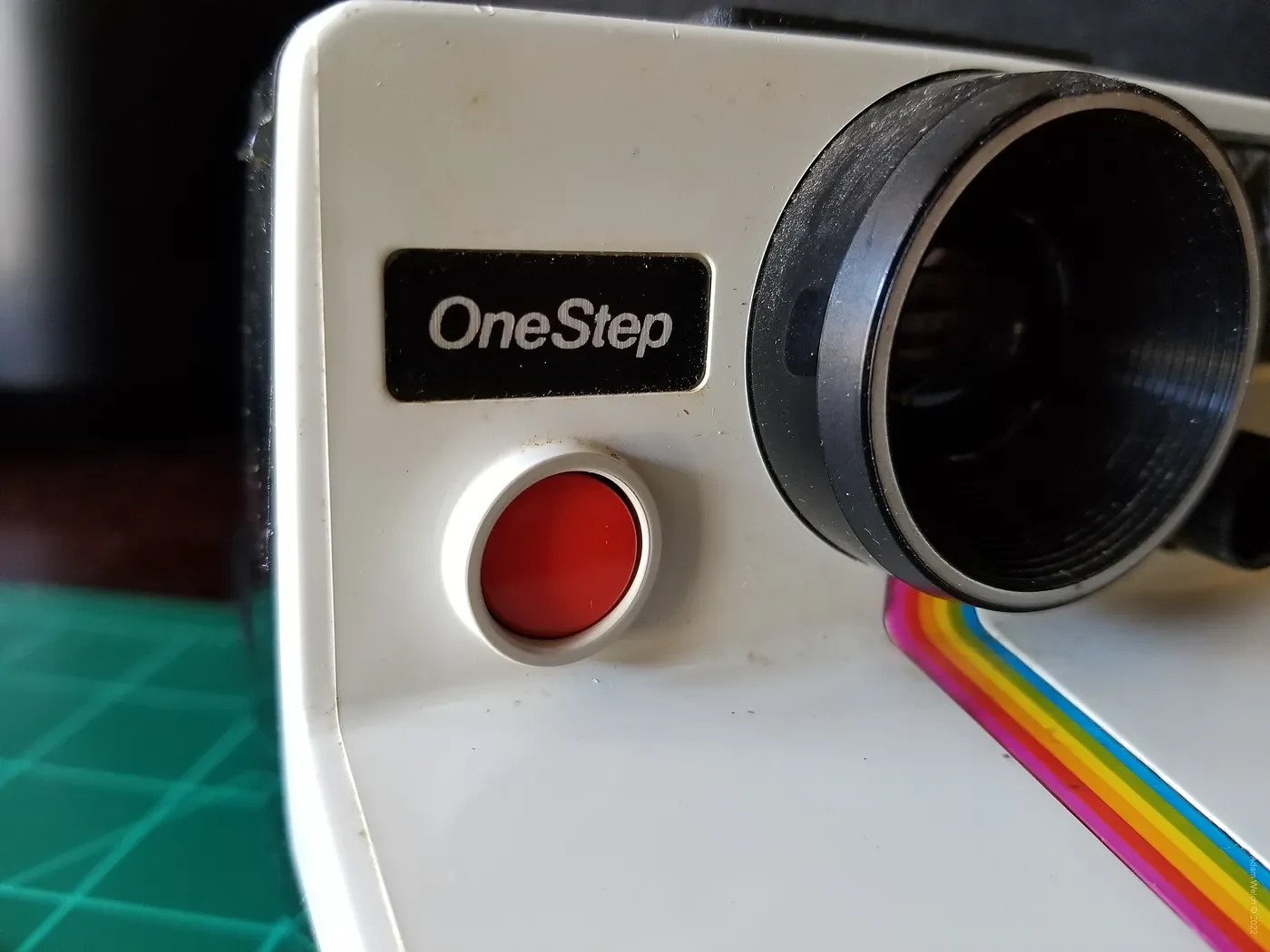
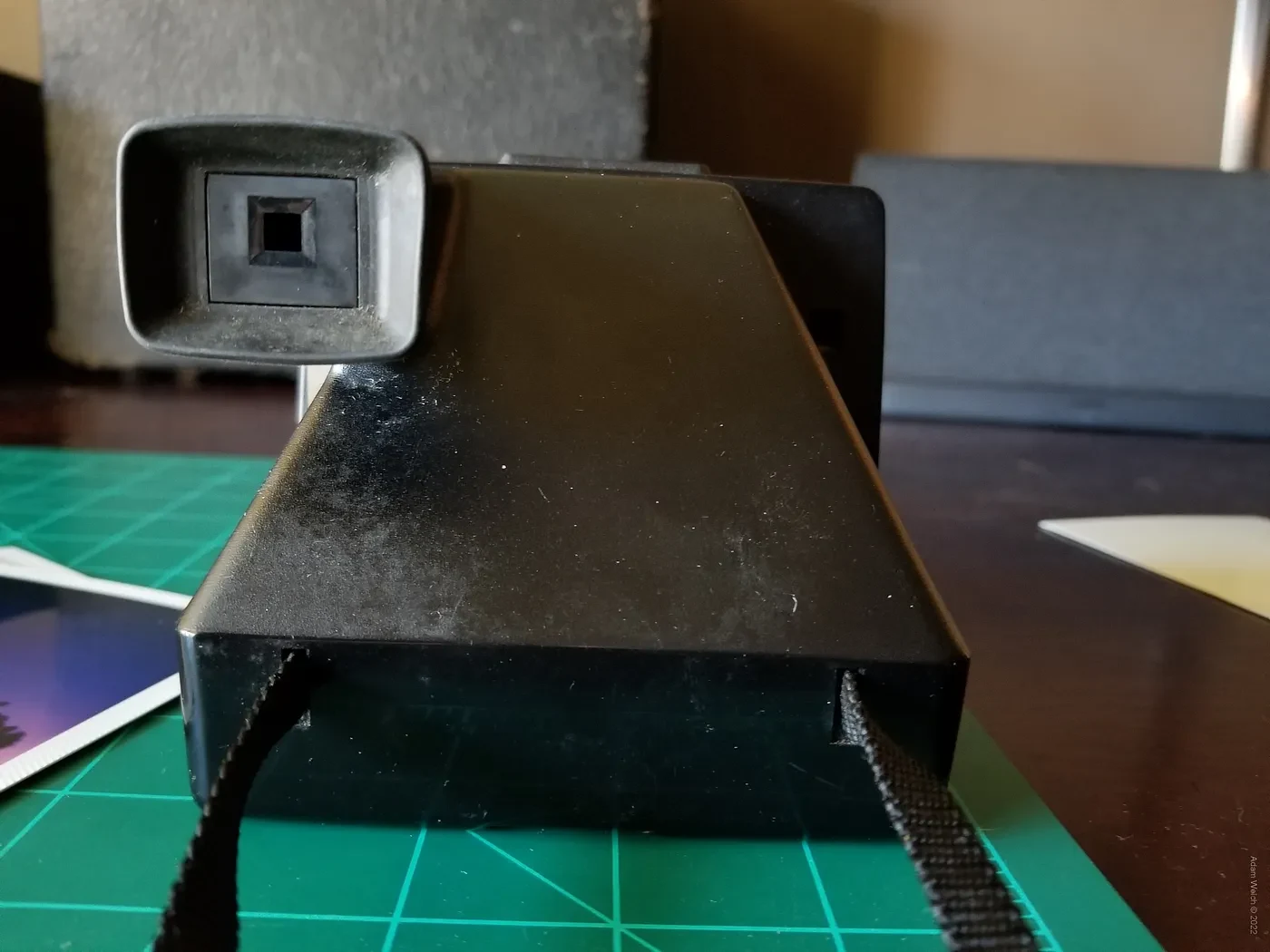
No focusing. No true exposure control. Nothing for the user to handle other than pointing the camera and snapping the shot.
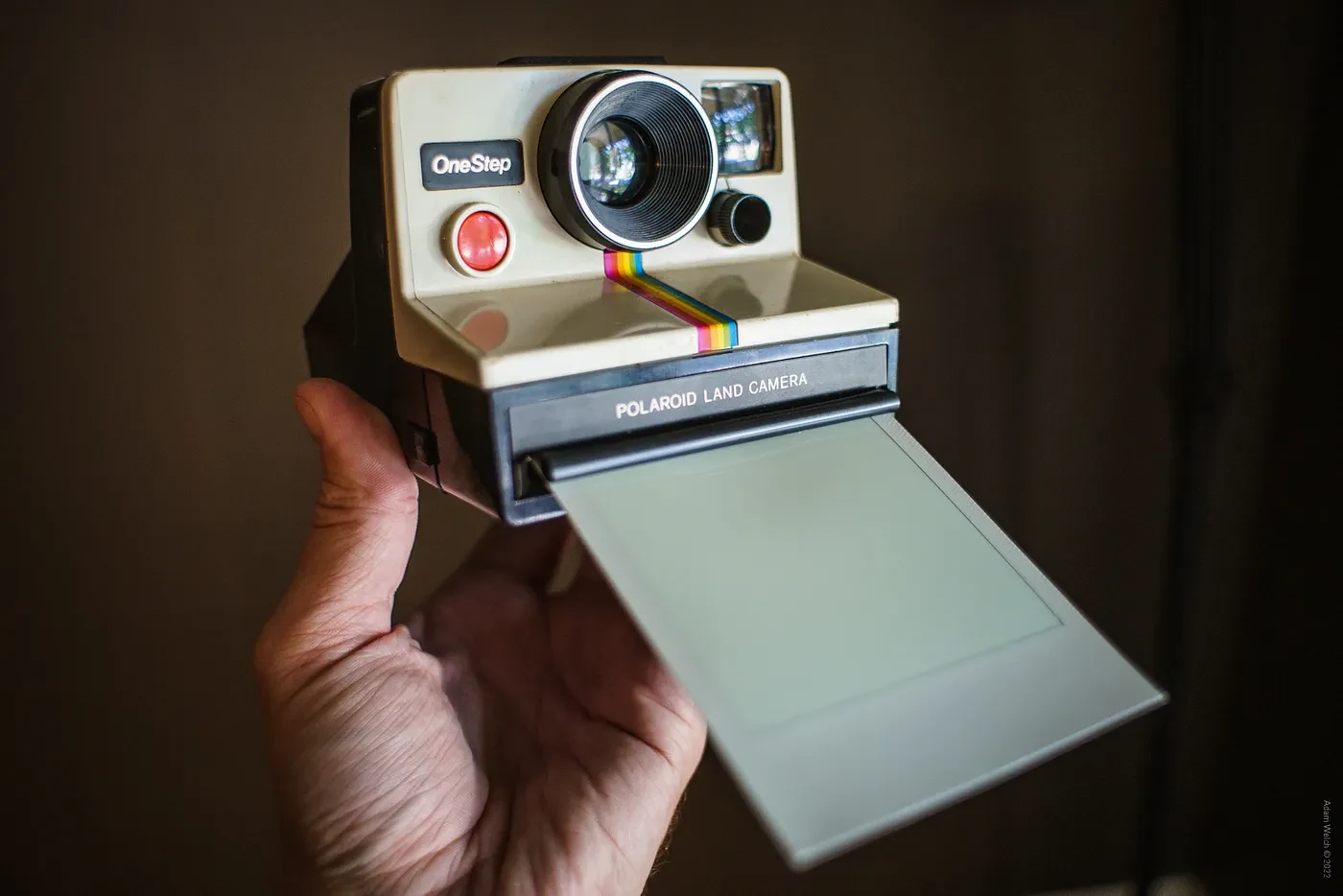
The official domestic USA title of the camera was simply the “OneStep Polaroid Land camera” yet other names abound. You’ll find the original OneStep listed as the Polaroid OneStep, the OneStep Polaroid Rainbow, and the lesser-known Polaroid Spit Box of Doom. In fact, the camera itself was branded as the “Land Camera 1000” for international distribution…which sounds 1000 times cooler.
In both domestic and international models their exists “red” and “green” versions of the OneStep/Land Camera 1000; that is, OneStep cameras which were produced with either a red or green shutter button. There are no operational differences between red and green shutter button models of the OneStep. Despite this, users still disagree as to which model was more prevalent. Of course, this contention is obviously just another desperate argument espoused by “greeners” to compensate for the inferiority of their stupid-colored shutter buttons.
That lens is a polished polycarbonate disc sporting a focal length of 103mm with a maximum aperture of approximately F/14.6. Minimum focusing distance is approximately 4 feet (1.2m). Interestingly enough, I actually switch back and forth between standard and flipped lens configurations with my OneStep as the lens itself is only held in place by four plastic tabs.
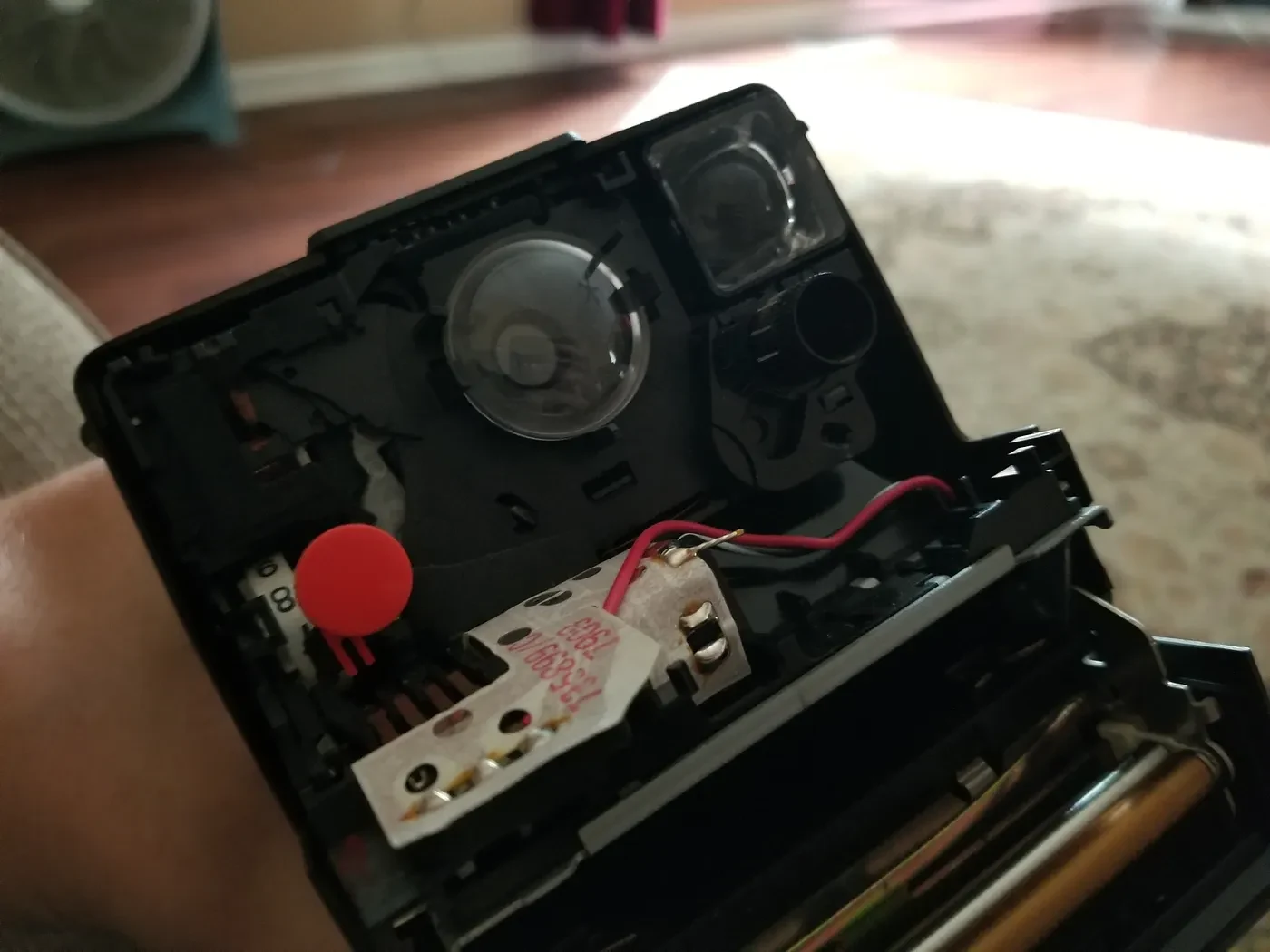
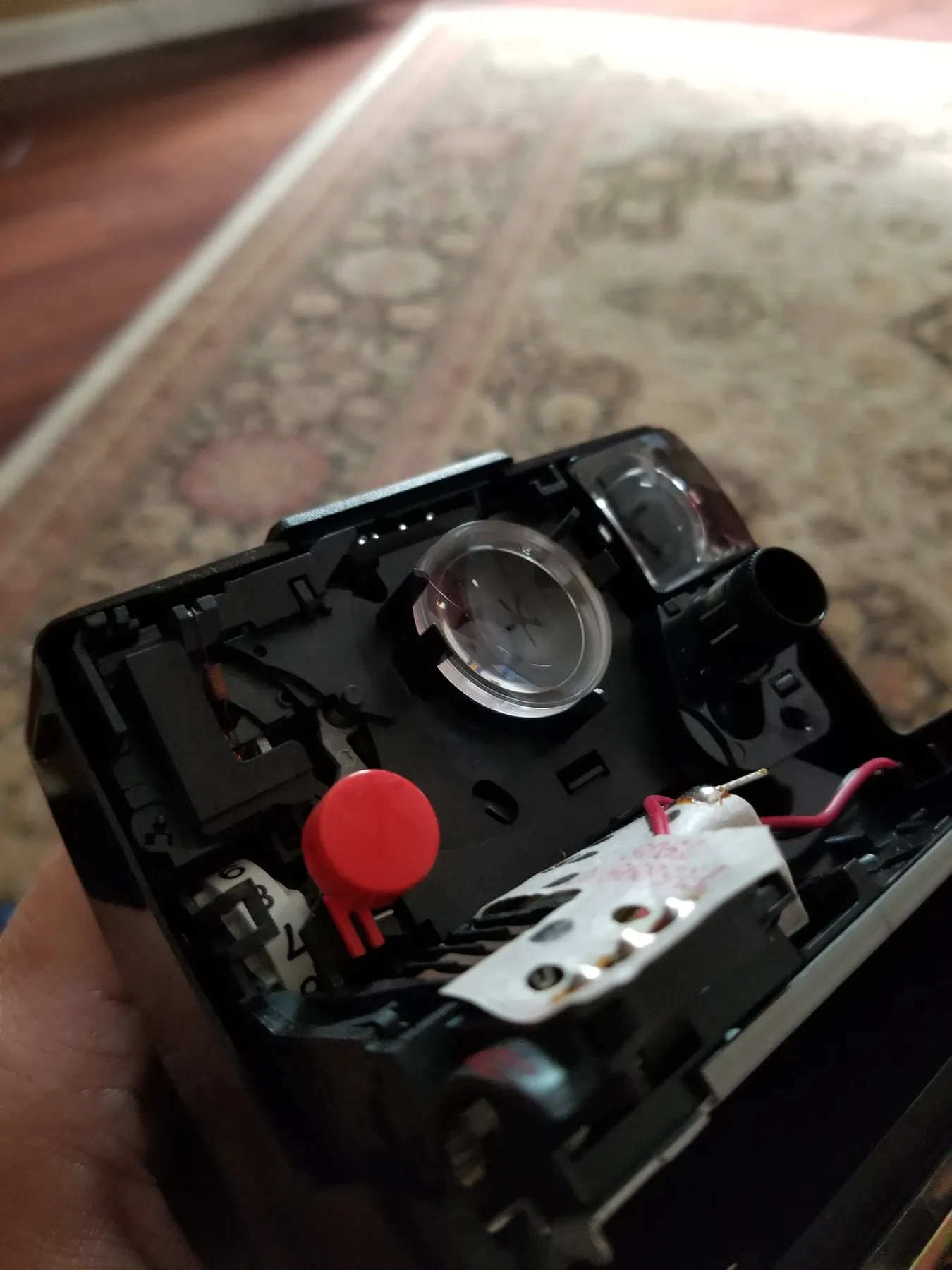
The results of the lens flip procedure are “nuanced”. Luckily, the lens can just as easily be reverted back to it’s normal orientation if you happen to be a normal person.
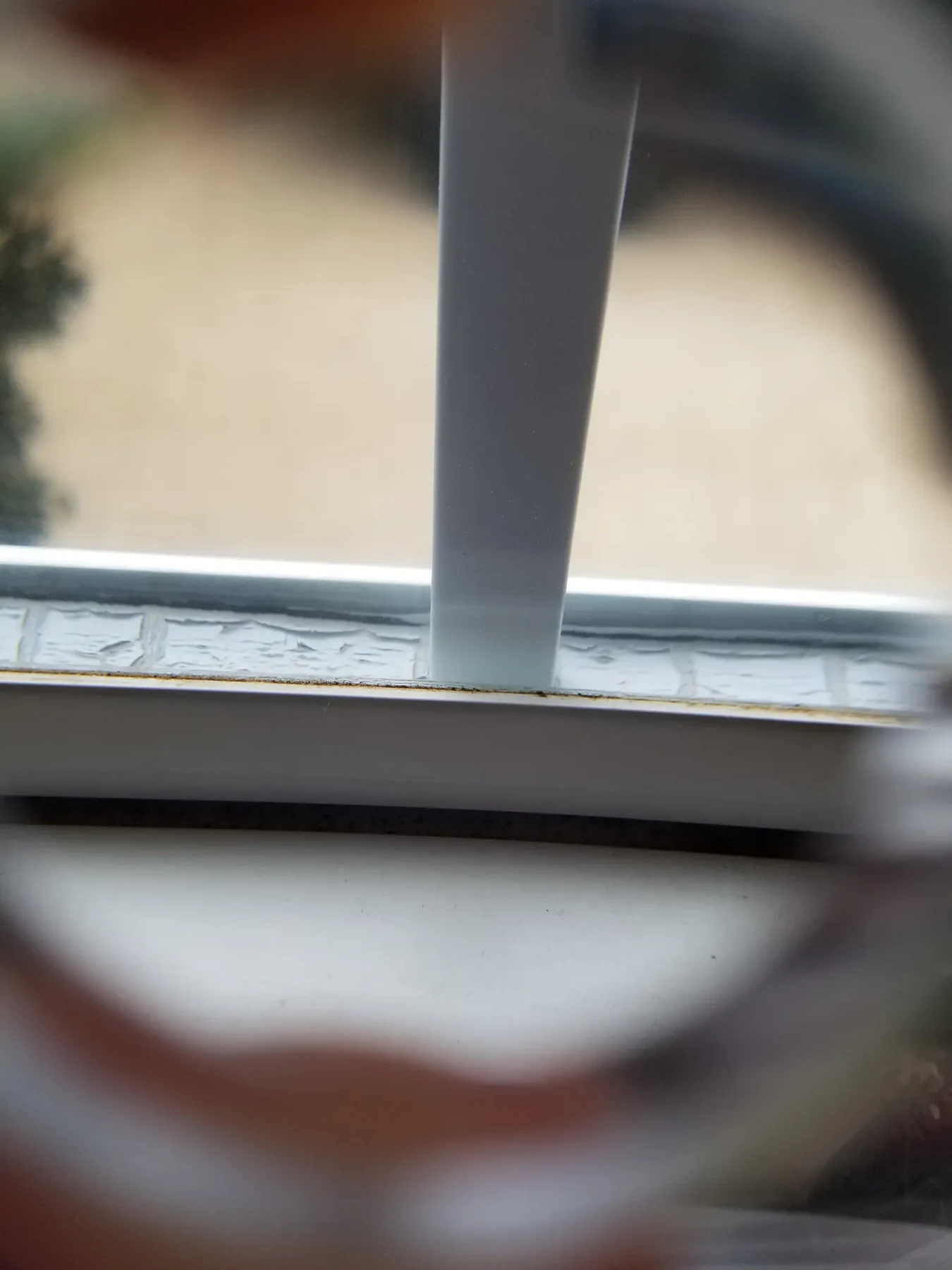
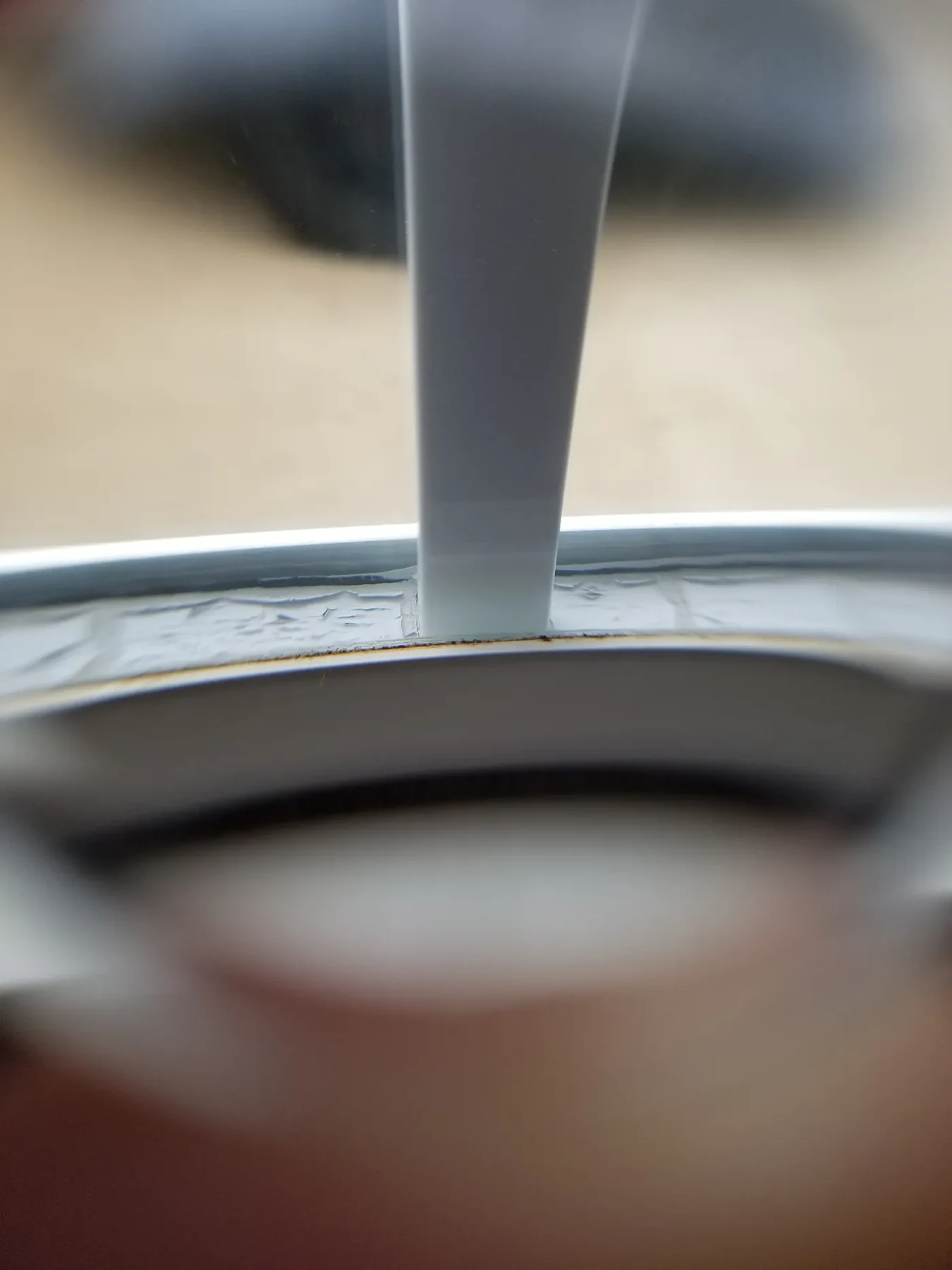
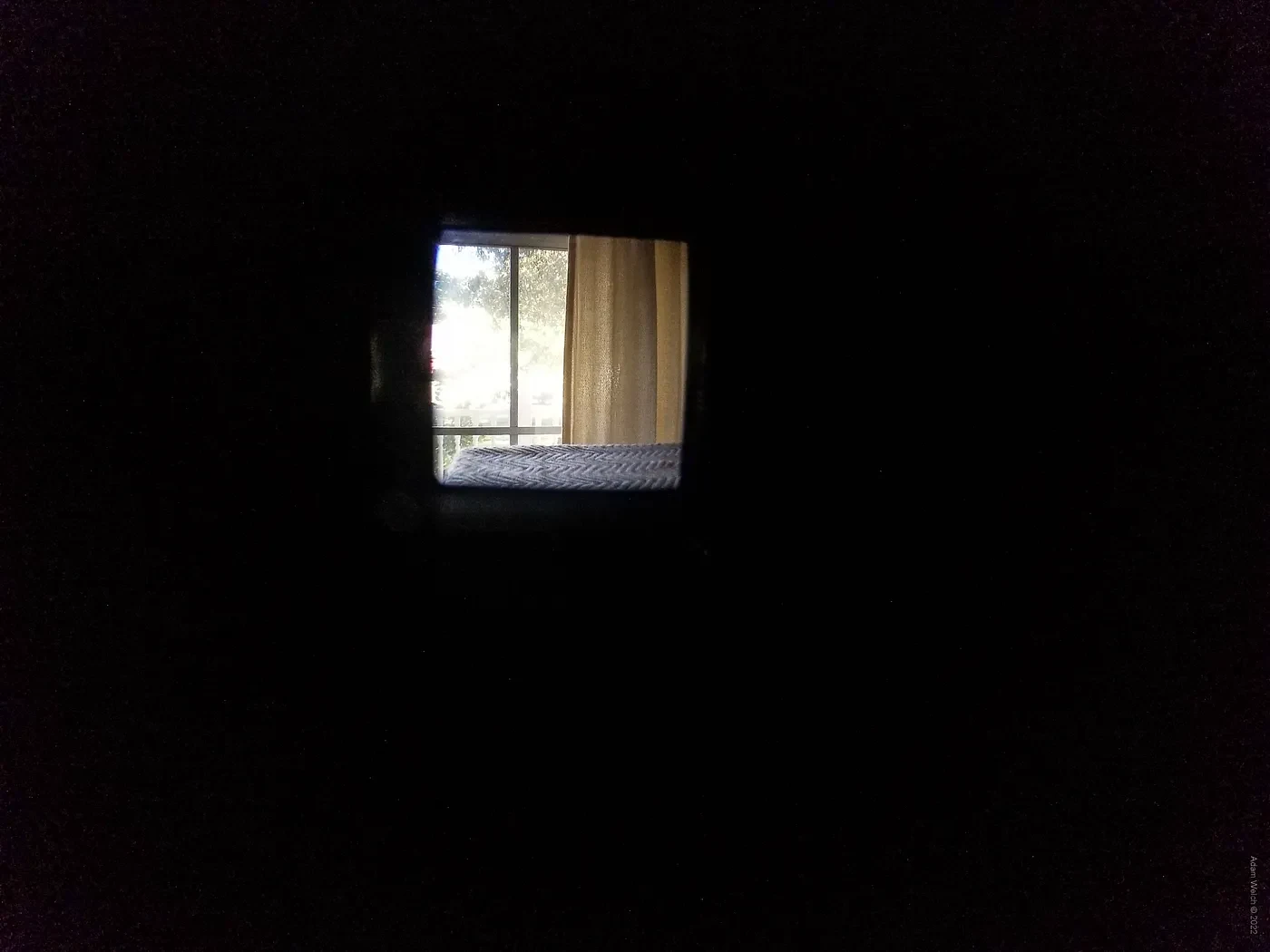
The optical viewfinder of the OneStep is non-parallax corrected and offers a delightfully miserable viewing experience. However, it does get the job done — I guess.
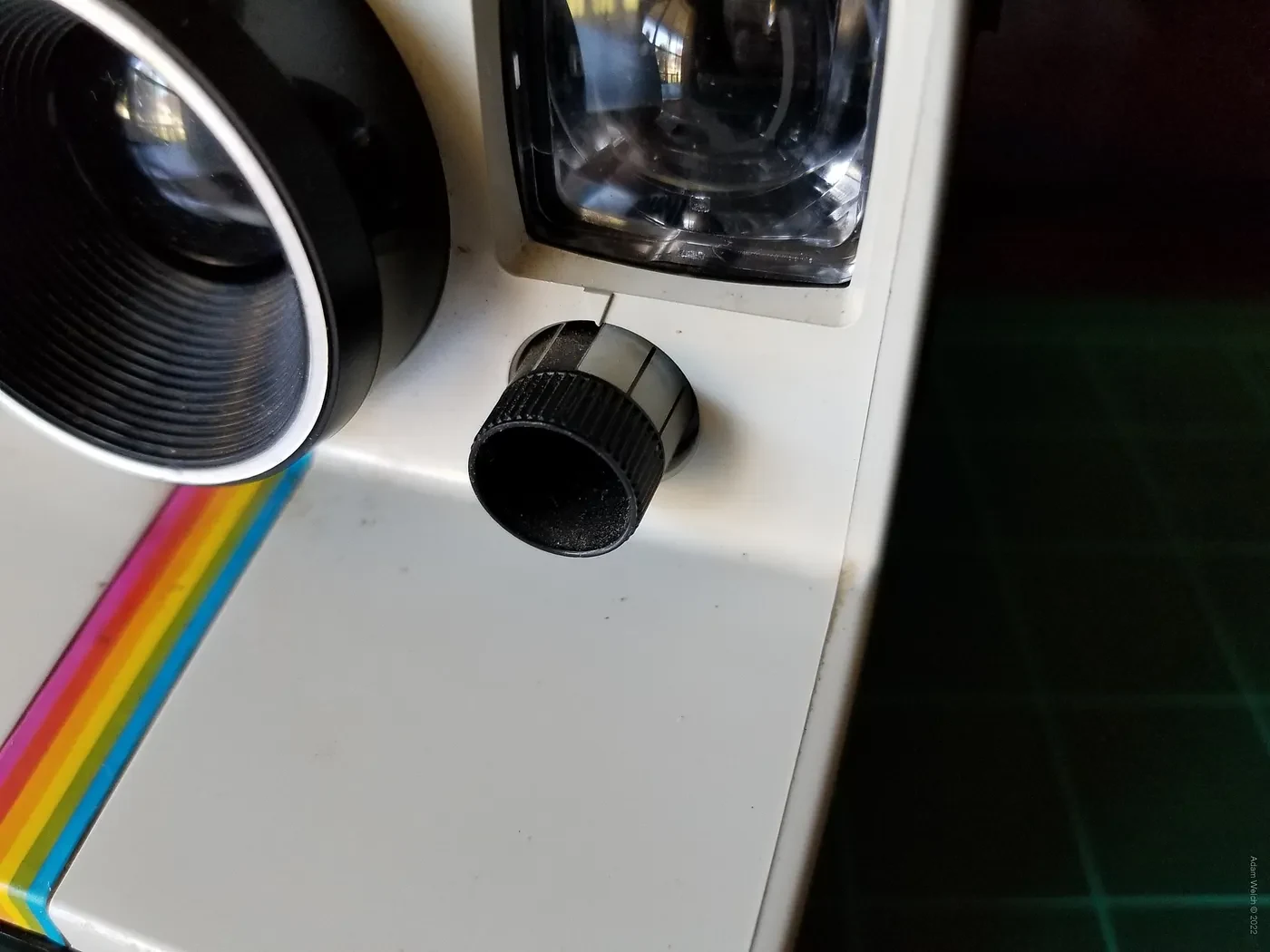
Exposure control of the Polaroid OneStep is completely automatic and is dictated by the tiny “electric eye” in the center of the exposure compensation dial.
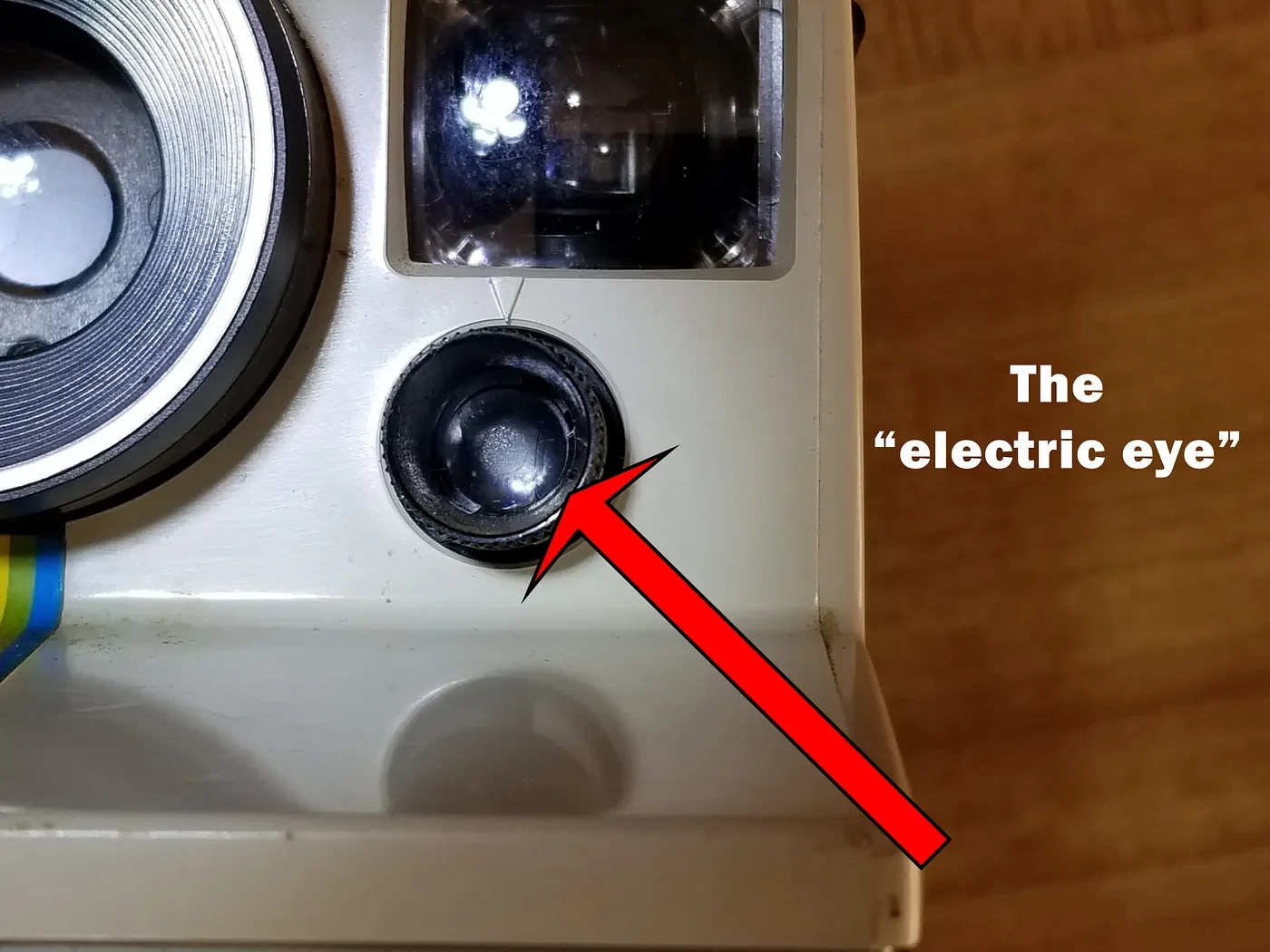
Depending on which end of the nerd spectrum you happen to occupy, the exposure control mechanism of the Polaroid OneStep is deliciously fascinating. Shutter speeds of the OneStep range from 1/4 to 1/200 seconds depending on how much incident light falls on the “electric eye”. More light results in a faster shutter speed; less light causes the camera to hold the shutter open longer. This is where that exposure control dial comes into play. Here it is again:
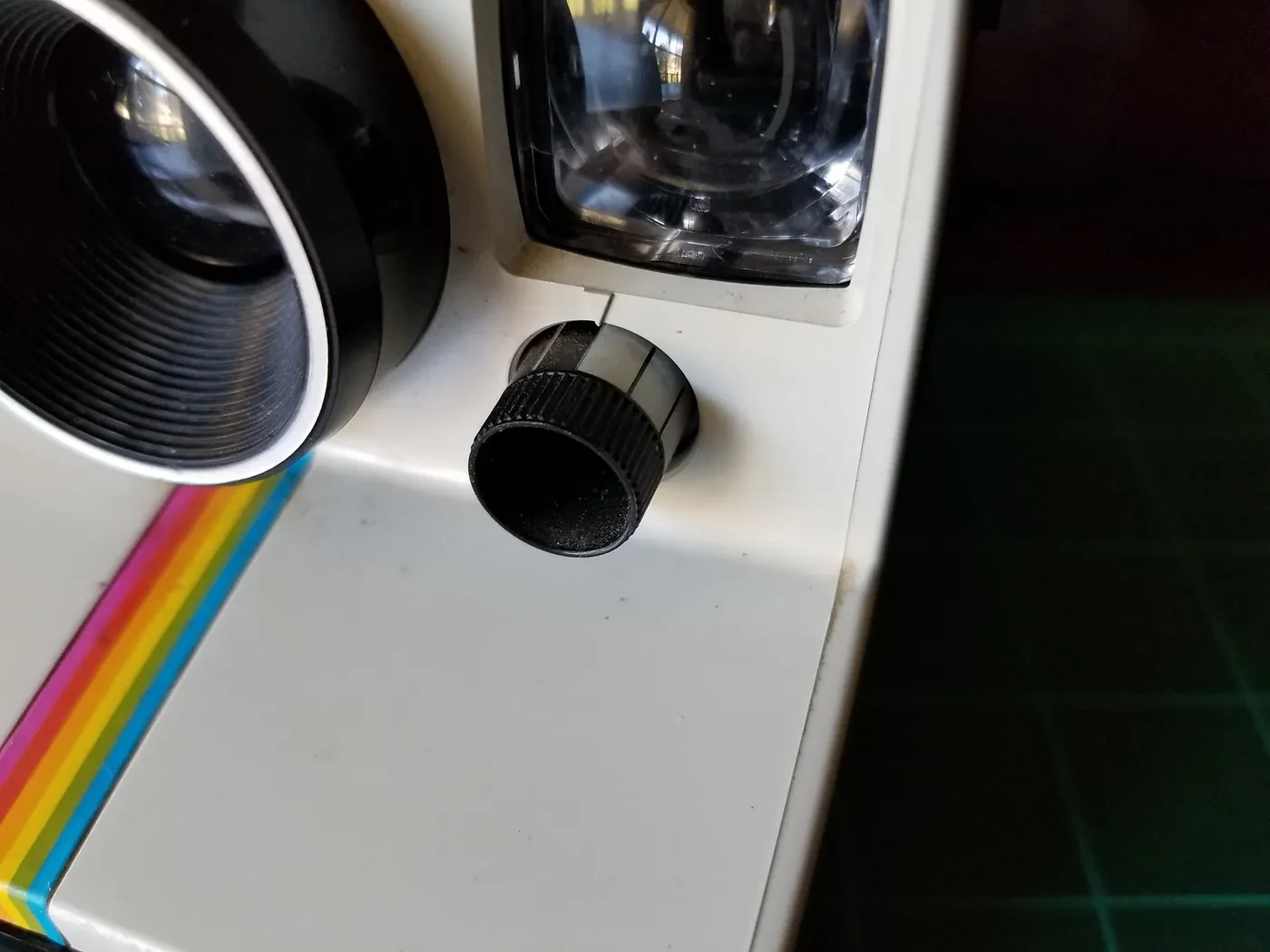
In the photo above, the compensation dial is in it’s “0” position; that is, it’s neutral or uncompensated position*. This means the shutter will expose for the base reading from the light meter. Turning the dial clockwise (if you’re facing the camera) towards the light-colored side will brighten your photos by allowing less light to enter the electronic eye (light meter), thereby essentially tricking the camera into leaving the shutter open for a longer time. The opposite is true if you turn the exposure compensation dial counterclockwise towards the dark-colored side. This will allow more light to enter the electronic eye which will cause the camera’s shutter to fire at a faster speed.
*Authors Note: I have found no documentation for the precise amount of exposure compensation represented by each delineation of the exposure dial. However, logic would hint that each line on the dial represents a 1-stop value based on the stated shutter speed range of the camera. Given there are three markings on either side of the neutral value, one could reasonably assume the dial follows a standard -3, -2, -1, 0, +1, +2, +3 metric similar to the exposure compensation of most modern camera bodies.
The OneStep also features a flash attachment point at the top of the camera which accepts standard SX-70 flash bars or the dedicated “Q-Light” flash module.
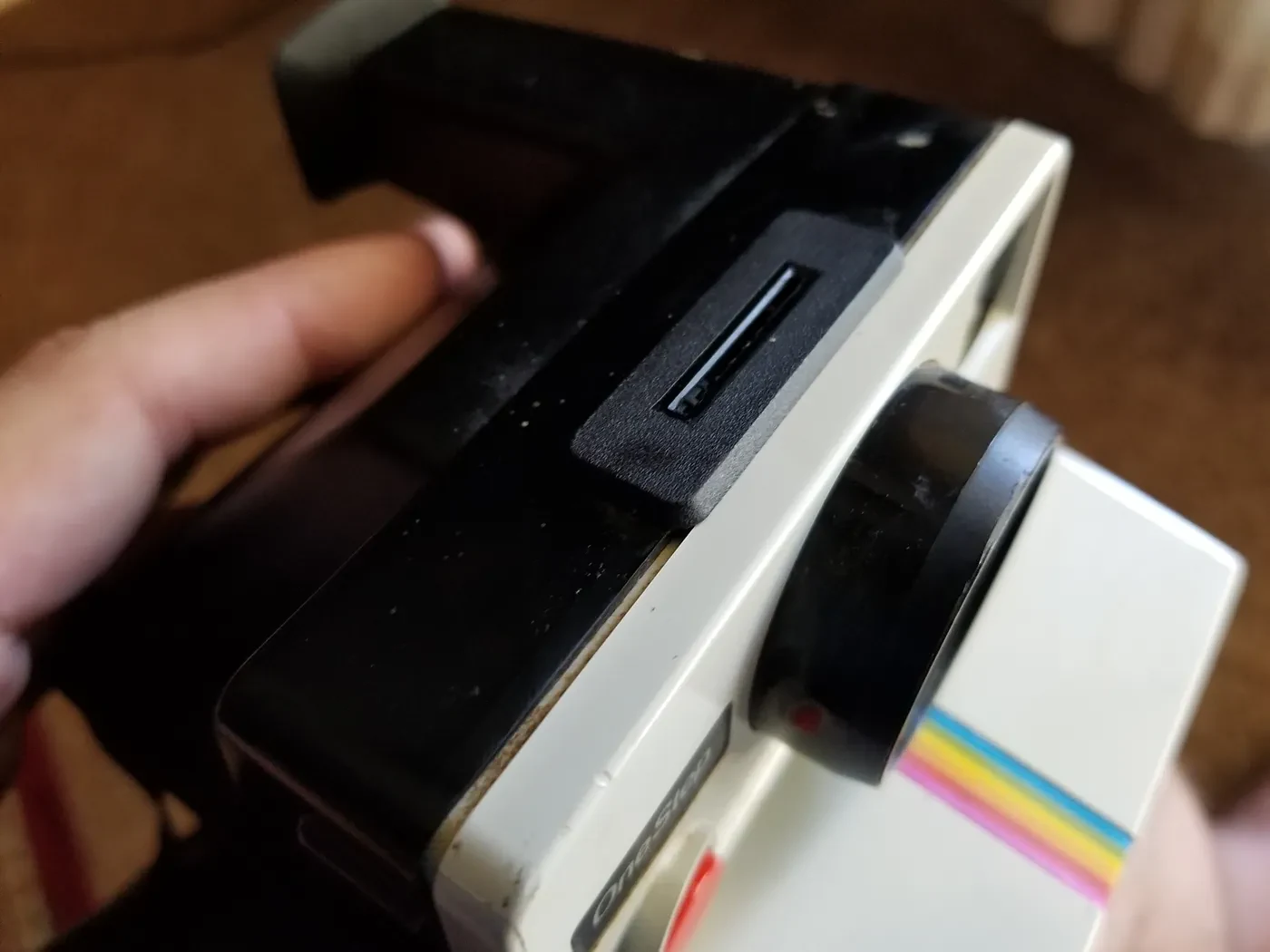
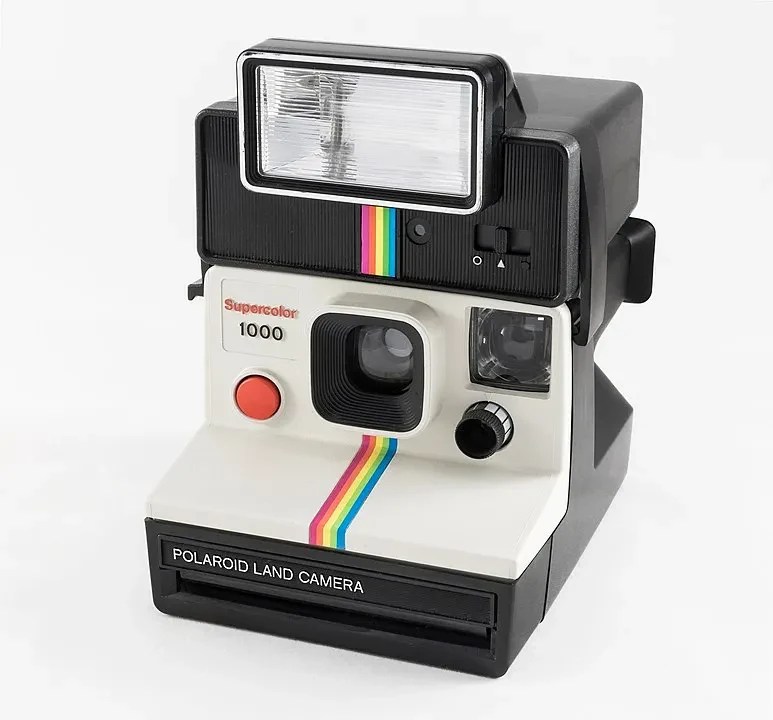
Speaking of flashes…this brings us to an interesting little nugget of trivia regarding the legacy of the humble little Polaroid OneStep: it was the original poster-boy for Instagram. That’s right, the OneStep is the reason** (arguably) the original image format of Instagram was square — and the camera itself was the platforms very first logo way back in 2010:
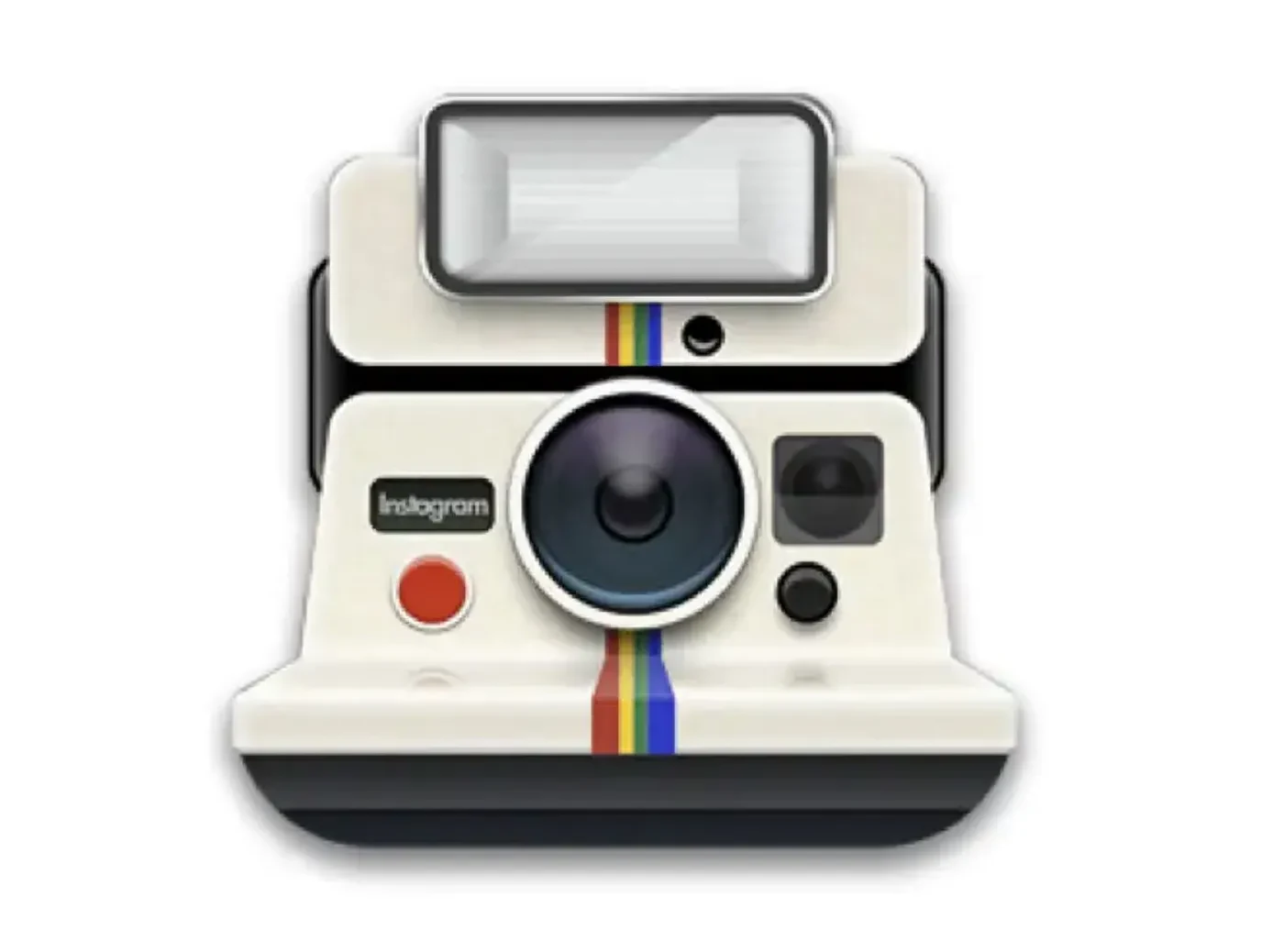
INSTAgram…INSTAmatic cameras…OneStep for the logo…it all makes sense now.
*Authors note: As far as I know, the founder of Instagram (Kevin Systrom) has never stated that the original, square image format of the platform was influenced by the 7.9cm x 7.9cm SX-70 frame size. Instead, it is widely accepted the format was chosen for it’s ease of viewability across mobile phone screens…but…I mean… you know…just maybe….
What does it eat?
Technically speaking, the original Polaroid OneStep was designed for use with SX-70 pack film. However, the camera will function with more modern,
Polaroid 600 film as well — with a few caveats which we’ll sift through later. For now, just know that the film pack is loaded via a slide catch on the right side of the camera. This drops the entire front portion of the camera down, exposing the film compartment.
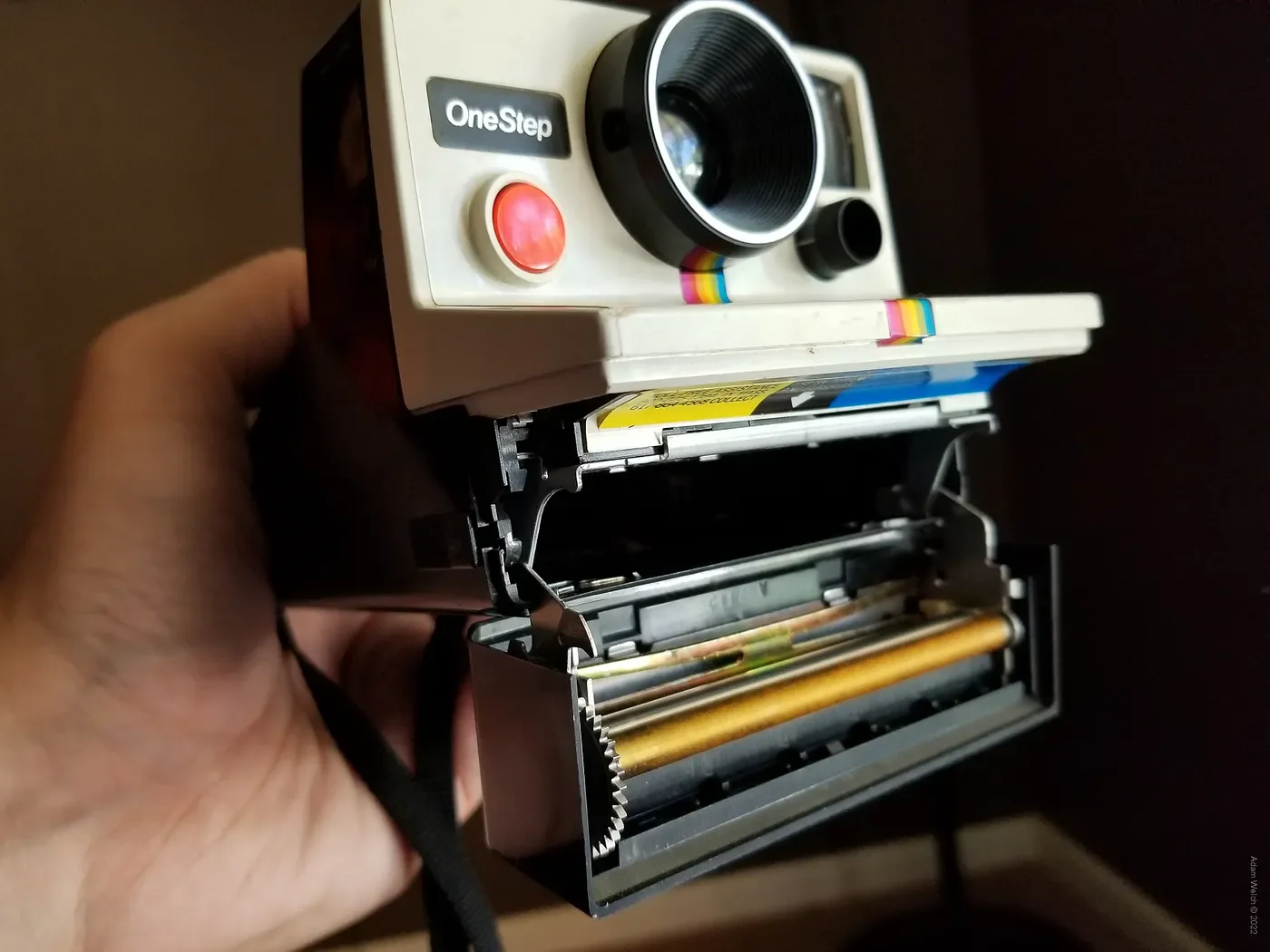
The film pack is loaded into the camera and the film gate is closed. If God is on your side, the top cover of the film pack will automatically eject from the camera and you will be ready to shoot your OneStep, free to live a life of religious fulfillment. Keep in mind, however, that the original SX-70 film packs contained 10 frames. Because of this, the frame counter of the OneStep automatically resets to “10” each time a new film pack is inserted. Unfortunately, modern packs of SX-70 and 600 film only contain 8 frames.
This means that you must subtract “2” from whatever the frame counter happens to display in order to know the accurate number of remaining frames.
One thing of particular note about Polaroid film packs is that the film cartridge itself is truly the beating heart of the entire camera system. The reason for this being that the OneStep (original model) camera contains no batteries and is instead completely powered by the battery held within the film pack.
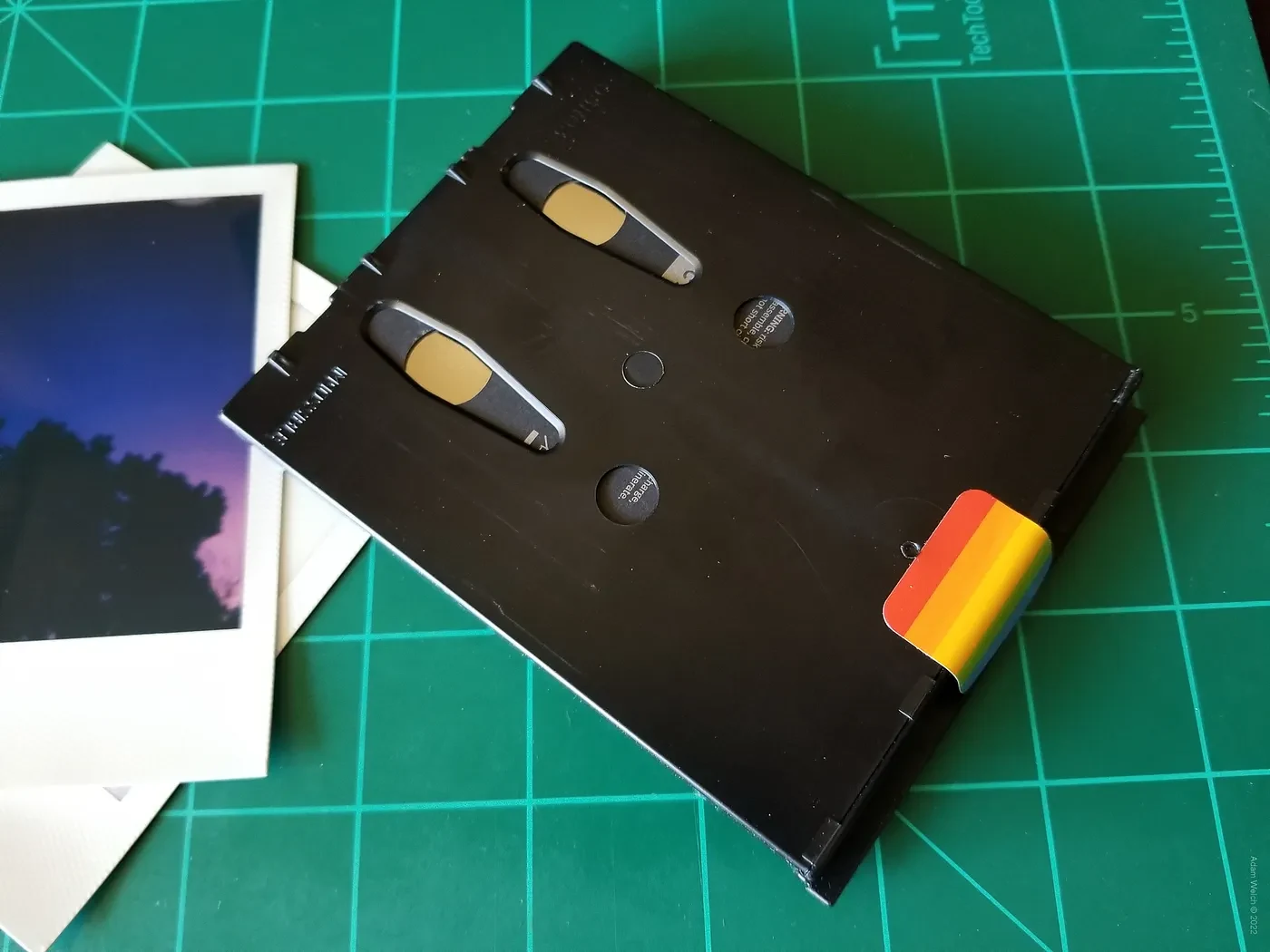
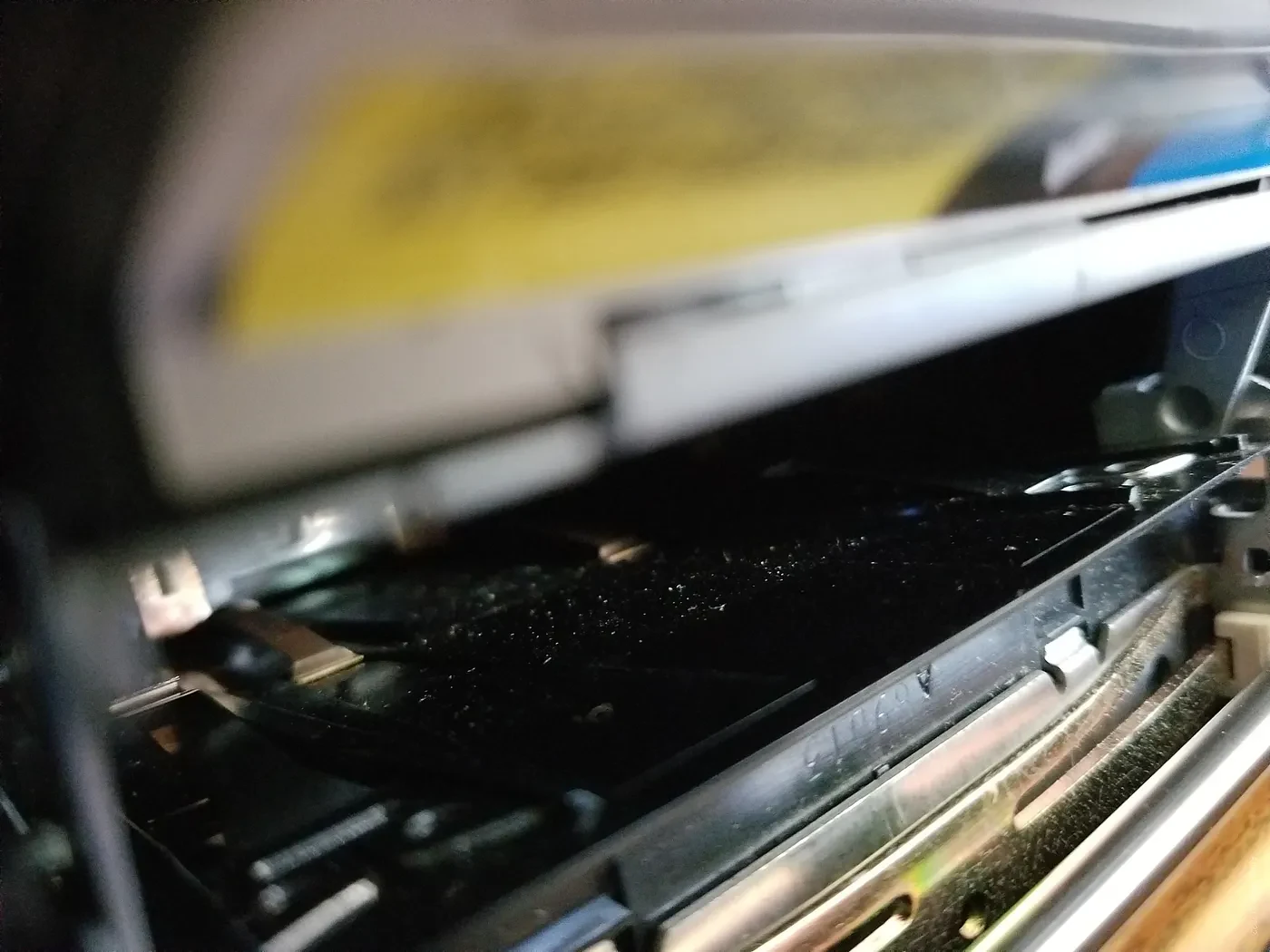
This battery-absent design was present on virtually all legacy Polaroid film pack cameras until the creation of modern “I-Type” film packs which are intended for use exclusively with contemporary iterations of certain Polaroid camera models produced by Polaroid (formally Polaroid originals). These cameras feature onboard batteries which negate the need for an external power source. We’ll briefly discuss this turn of events towards the end of all this madness.
I mentioned earlier that one can use both 600 and SX-70 film interchangeably with the Polaroid OneStep and that is completely true. In fact, I’ve ONLY shot 600 film packs in my OneStep (don’t @ me) simply because it is still readily available to me locally. For all practical purposes, SX-70 film is dimensionally identical 600 film. The difference being that SX-70 sports an ISO/ASA rating of 160 whereas 600 film is, as the name would suggest, ISO/ASA 600. That’s quite a leap in terms of light sensitivity. This major difference in film speed requires the user to be extremely “selective” of their subject matter and diabolically aware of lighting conditions because the electronic eye has no idea it is now metering for a much faster film stock. At its quickest shutter speed (1/200) an image made with the OneStep on 600 film would be nearly 2-stops overexposed compared to a photo made at the same shutter speed using SX-70 film.
There are, of course, other workarounds to this sensitivity conundrum. Third-party manufactures now produce 2-stop neutral density filters which fit directly over the 600 film packs to compensate for the increased ISO/ASA rating. The present, official Polaroid company itself actually includes a set of lens filters with some of their newer OneStep-inspired cameras but insist on being complete bastards by not making a native ND filter available for individual purchase (that I’ve been able to find). Naturally, I’m considering constructing a self-made, press-on ND filter for my own camera but thus far these efforts have been severely handicapped by the author’s inherent laziness.
The Juice
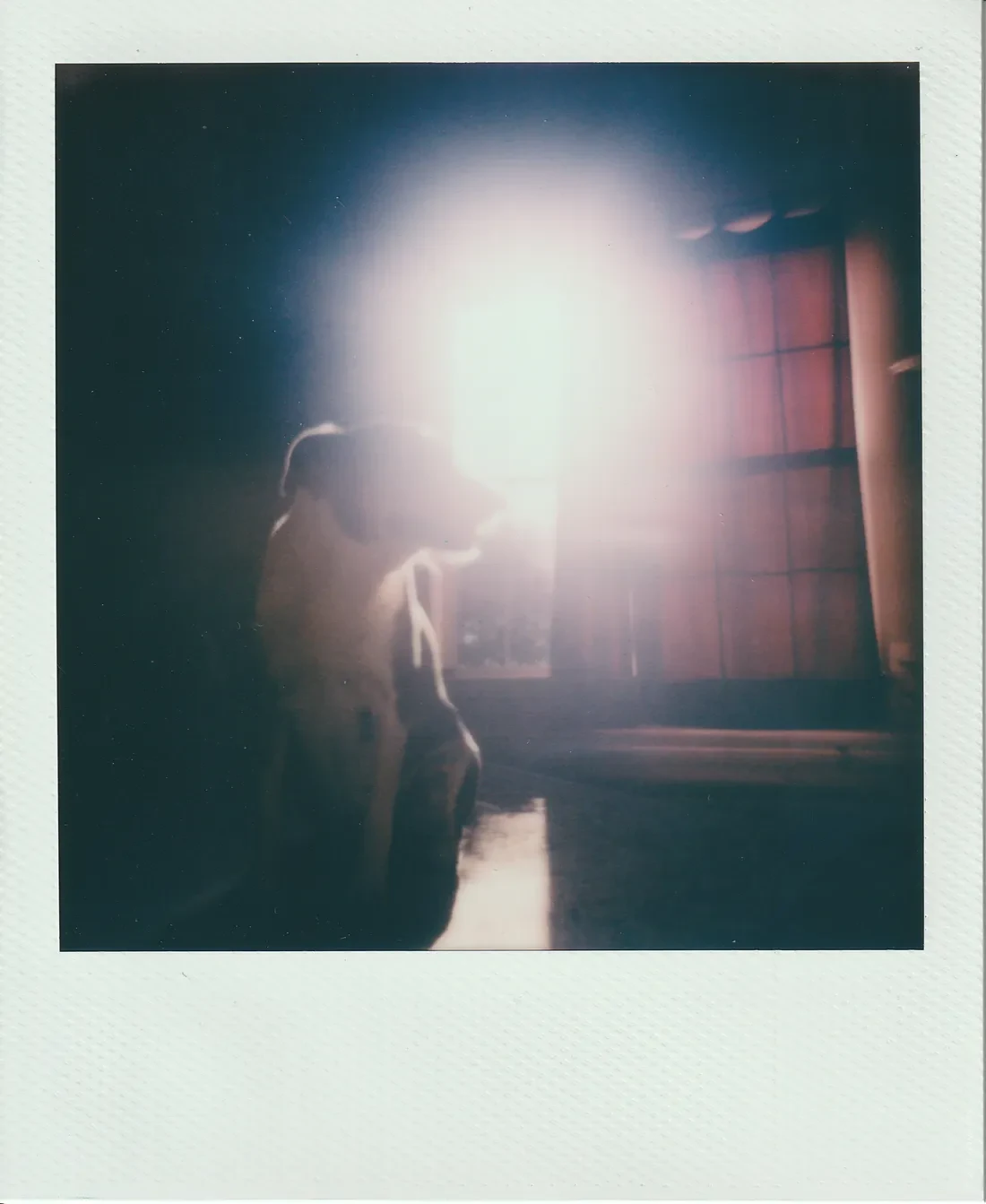
Here is a small selection of recent photographs made with the Polaroid OneStep. All images were captured on 600 pack film.
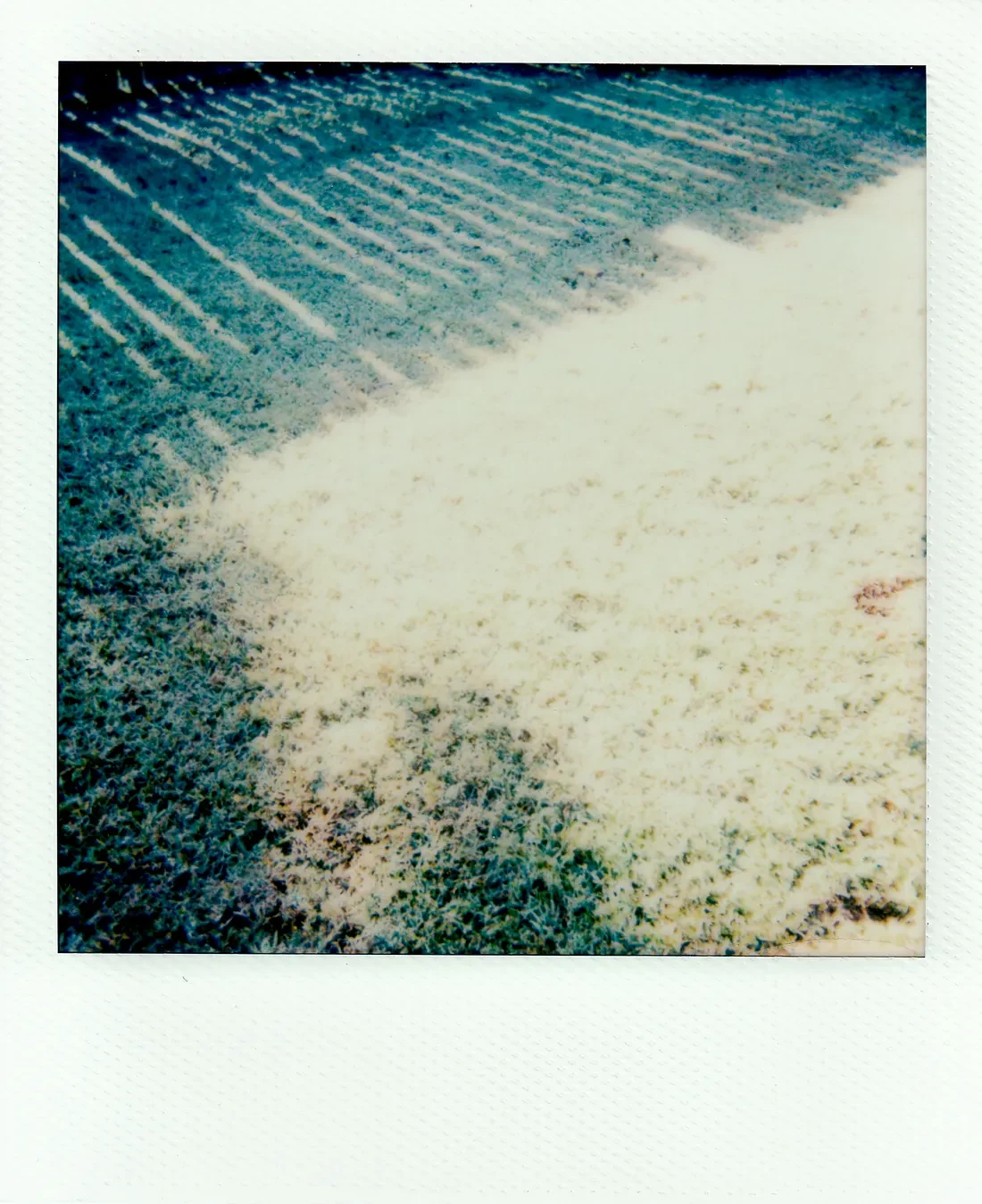

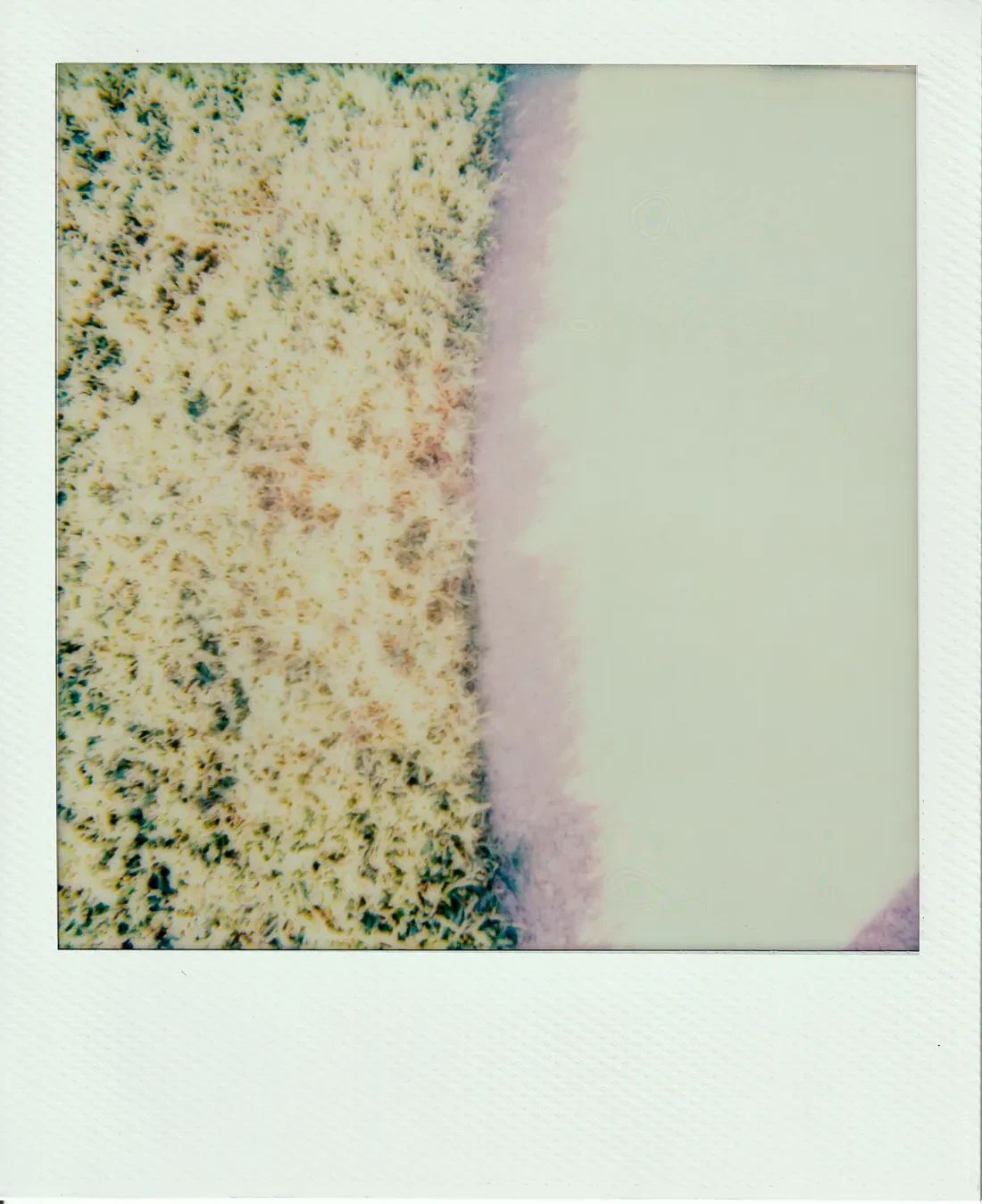
A Polaroid Renaissance
Woven into the saga of the Polaroid company are tales of extraordinary innovation, spectacular failures, Polish billionaires, stubborn determination, and more name changes than a P. Diddy convention. The story of Polaroid cameras and Polaroid film is something straight out of American fiction and to cover it in its entirety would require more time and space and rum than could ever be legally confined within a single story here on Medium. With that being said, just know that while the original Polaroid Corporation went out of business in 2001 it has been reborn (multiple times) until we now arrive at its current incarnation known simply as “Polaroid”.
Polaroid produces multiple “re-imaginings” of some of its original instant camera models including the OneStep. The Polaroid OneStep has been reborn into the “Polaroid Now” camera; the most recent version being the tech-saturated “Now+”.
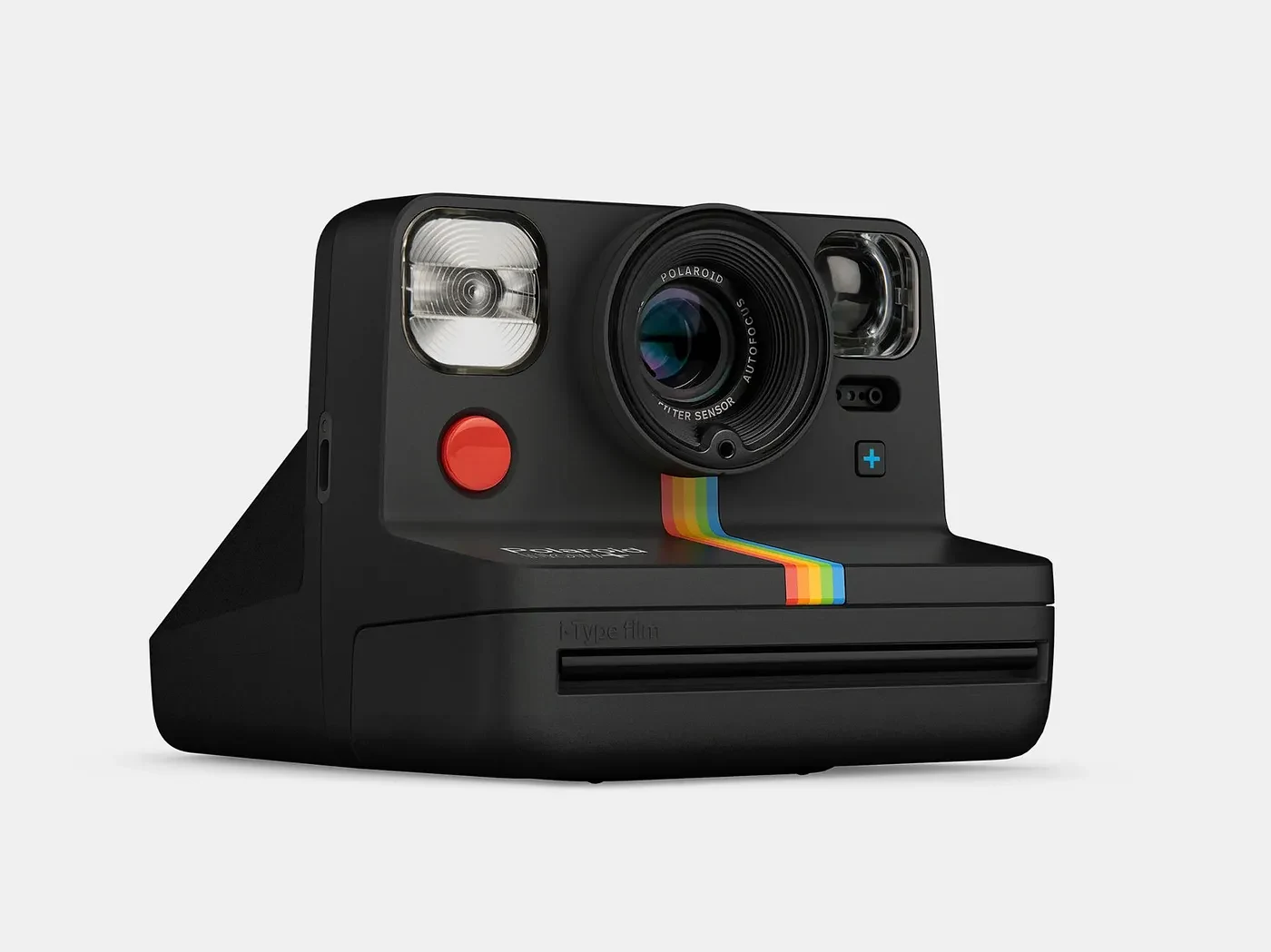
The Now+ stands high in the mezzanine chuckling sadistically as it throws four day-old bread down to the starving masses of original OneStep shooters. This camera features absolutely space-age technology compared to Dr. Lands 1977 OneStep. Current upgrades to the Now+ include a tripod mount, rechargeable onboard batteries and flash, increased range of shutter and aperture control, digitized frame counter, plus a fully integrated mobile app allowing the user to go knuckle deep with their new “old school” experience.
Naturally, seeing as the Now+ goes into battle carrying it’s own batteries, the camera shoots I-type film packs. These battery-less I-type packs are slightly less expensive but virtually identical to the modern productions of SX-70 and 600 film in terms of frame size.
Compared to the cost of the original OneStep, the Now+ is roughly on par (or a bit cheaper). In 1977, a brand-spanking new OneStep sold for $40US which in 2022 dollars translates to about $195.49. At the time of this writing the Polaroid Now+ sells for $149.99 with free shipping. Could it could be the price for instant photographic satisfaction has lessened since the days of Dr. Land?
At least they gave it a red shutter button….
Buyer be extremely…ware
If you choose to go full-on “OG” and source your own, original OneStep like the one I’ve shown you here then do so extremely carefully. As with most vintage items which find new life prices on eBay have inflated somewhat in recent years but not as much as some other cameras. Still, these waters must be waded carefully. The inherent danger with buying any Polaroid camera which is powered by film packs is that it’s literally impossible (well, within reason) to test the cameras functionality without inserting the requisite film. This means that you will encounter many cameras as being “untested”. Granted, these will be the cheaper options but there is just as much of a chance the camera will be dead on arrival as there will be of you receiving a perfectly operational sample. Make sure to manage your expectations accordingly.
Should you be feeling bold, the patient collector can still source un-tested yet cosmetically gorgeous examples of the OneStep on eBay for under $20US. If you’re lucky, film tested versions in good condition can still be had for not much more. However, certified film tested models in mint condition from reputable (well known) sellers can at times fetch as much as $100US if not more.
Here are a few things to watch out for when weighing up your options for purchasing a vintage Polaroid OneStep:
Physical condition: OneStep cameras are essentially made of plastic so make sure there are no visible cracks or breaks in the camera body itself.
Viewfinder condition: Believe it or not, the viewfinder of the OneStep is essentially free-floating and is held in place by the front housing. If the mounting clips are broken or damaged the viewfinder can literally fall out of the camera.
Shutter button condition: Much like the viewfinder, the shutter button of the OneStep can be prone to breakage. Fortunately, if the shutter button is physically present within the housing it is likely operational.
Ejection roller/gears: The rollers that eject the exposed photos rarely break (although they get dirty). However, the gears and cogs which move them do sometimes become jammed or broken. Be sure to ask the seller if the rollers “roll” smoothly. They should be able to roll them even without power.
All other evaluation of functions will require powered-testing.
Here are couple of my partner links for general OneStep searches on eBay should you be feeling lucky. I’ve included name variations as well which can sometimes yield some great deals.
Polaroid Land Camera 1000 on eBay (try this especially if you are located outside the United State)
Polaroid Rainbow Camera on eBay
Polaroid OneStep SX-70 on eBay (this might turn up some folding SX-70 models as well)
Parting lamentations…
For all its charm and selective merits, the instamatic Polaroid-type camera experience is certainly not everyone’s cup of Drain-o (don’t drink Drain-o… obviously). Honestly, it really isn’t even something I thought I would ever enjoy. I mentioned at the beginning of this little yarn that I once owned a mint SX-70 camera outfit. It was beautiful; totally complete with its original case along with every available accessory, receipts from when the original owner first purchased it and even two packs of real (from the 1970’s) SX-70 film.
And I only used it four times before I sold it.
I travelled with the camera but for some reason those relatively low-res pictures never struck me. Looking back, I think it was the inherent complexity of the SX-70 camera that somehow seemed to throw off the entire experience for me. There’s no doubt the SX-70 is literally a marvel of engineering but the need to physically unfold the camera (which is amazing btw) then focus, and finally guestimate any exposure compensation robbed the very carefree nature from the Polaroid mindset.
I actually forgot I even owned the OneStep until a couple months ago when I was cleaning out my camera vault as I prepare to hand myself over to the savage mercies of the open road. After I shoved in a pack of 600 film I immediately became immersed with the instinctual bliss that comes from simply making a picture. Fixed focus. No real worry about exposure. Just feel, point, and shoot. I think this is the same atavistic longing which makes me so infatuated with olde dog box cameras like my Kodak Six-20 Flash and Imperial XII. These kind of “simple” cameras somehow manage to shake open long shut creative doors within our souls by stripping away mechanical cares and technical worries.
Cameras like the OneStep lend us the ability to unobtrusively connect with, and ultimately release, a bit of ourselves nearly absent of conscious interference. This is an experience wholly different than anything else. The resulting print is there for only us to see as a singular representation of an instant in time which occurred so quickly that we didn’t even perceive it’s passing or arrival. One print from one moment that will never come again.
All text and images copyright 2023 by Adam Welch unless otherwise indicated.
Buying through these links helps keep this site running.